What to know
- The warning concerned a possible attack on Kiteworks systems.
- The cited advisory described the action as preventive.
- The historical shutdown window is not current restart guidance.
A precautionary notice under uncertainty
Beazley Security Labs reported on September 25 that Kiteworks had notified customers of threat intelligence indicating a possible imminent attack. Its advisory described a temporary shutdown recommendation for self-managed systems and said Kiteworks would handle the systems it hosted. Beazley cited a customer email obtained through intelligence-sharing relationships.
The account also stated that Kiteworks had no indication of compromise at that point and that no specific CVE or detailed technical explanation was publicly available. Those are limits of the reported evidence, not proof that no attack could occur. This article covers that dated warning; the historical shutdown interval should not be treated as current operational guidance.
A warning and a breach are different claims
An organization can receive credible intelligence about a possible attack before researchers have identified the mechanism. A precautionary action can therefore be warranted without a confirmed incident. Reporting should preserve that sequence rather than turning the warning into a claim that customer data was stolen or a known vulnerability was exploited.
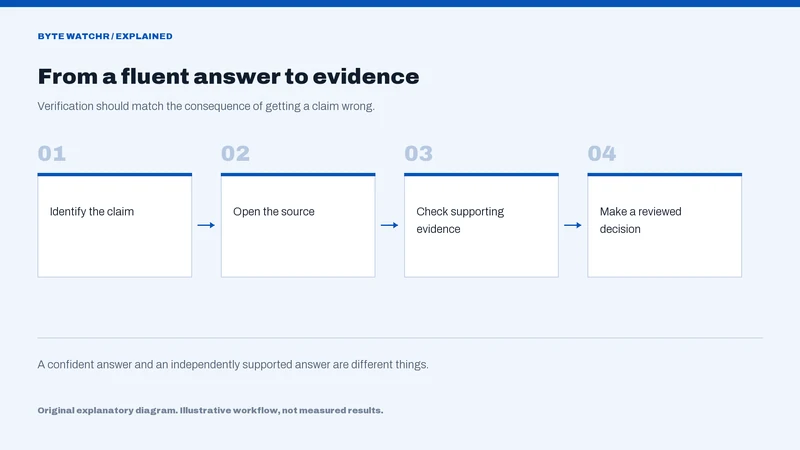
The same caution applies to the absence of an observed compromise. An early assessment may reflect limited visibility or an investigation still in progress. The useful record identifies who made the statement, when it was made and what evidence would change it. That allows later updates to refine the account without rewriting uncertainty as certainty.
Operational teams need the customer-specific vendor communication, including any later revisions. A public summary may omit deployment details or be superseded by follow-up instructions. Decisions to stop or resume a service should therefore be tied to the current advisory and the organization’s own incident process, rather than a copied time window from a news report.
Continuity planning belongs in the response
Byte Watchr’s analysis is that an unusual shutdown recommendation tests more than vulnerability management. It tests whether the organization knows where the affected service is deployed, who depends on it and which alternative process can operate during an interruption. That information is difficult to assemble quickly if ownership is scattered.
A useful incident record would preserve the original notice, the version and exposure of each relevant system, the actions taken and the basis for restoring service. It should also distinguish a preventive shutdown from evidence of compromise so that internal reporting does not imply an incident that has not been established.
The public advisory supports a narrow conclusion: a vendor warning led to a temporary protective recommendation under incomplete technical information. Determining whether any particular deployment was attacked requires additional evidence. Maintaining that boundary gives readers a more accurate account and gives operators a clearer reason to seek the latest authenticated guidance before acting.
Sources & further reading
Factual statements are grounded in the linked material. Interpretation and illustrative examples are Byte Watchr analysis. Vendor claims are identified as claims, rather than independent testing.
The event date records the source announcement or documented operation. The coverage edition groups recent developments and is separate from the publication date. Actual publication is recorded above.
Corrections policy · About this byline