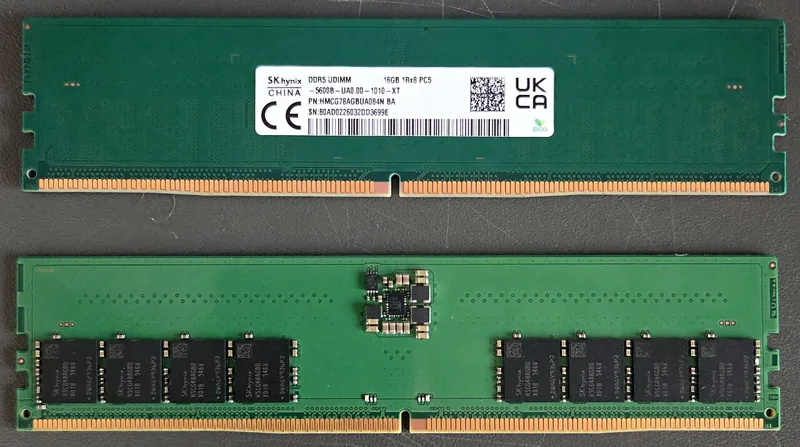
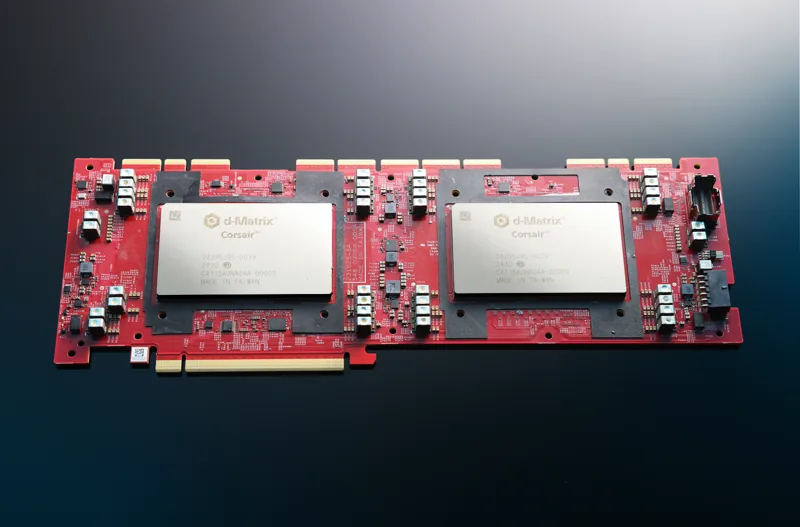
The startup raised $88 million to connect more memory around accelerators using laser-based links. Its advantage will depend on manufacturability, power, reliability and whether software can use the added bandwidth.
Six major AI companies agreed to internal controls and external audits, according to Reuters. Without defined consequences, the agreement’s credibility will depend on disclosure, verification and whether companies report failures as readily as successes.
The agency is examining whether AI companies misled consumers about risks, according to the Associated Press. The inquiry could make product claims, control descriptions and incident disclosures legally consequential.
The Nvidia-backed startup is preparing a lower-cost open-weight system aimed at organizations that want more control over deployment. The announcement also reopens the question of how capability and accountability travel with downloadable weights.
President Trump defended Ohio data-center development as voters question power costs, land use and local benefits. The dispute shows that AI infrastructure is no longer an invisible layer of the technology economy.
IBM says enterprises can run Bob in controlled infrastructure rather than moving sensitive code and workflows outside. Local deployment improves control, but governance still depends on permissions, logging and model operations.
Synopsys and OpenAI plan a specialized model for chip-design workflows while retaining conventional verification. The arrangement illustrates a useful pattern: generation can move quickly when ground truth remains independent.
The reported financing would value FieldAI at $10 billion as it develops software meant to operate across robots and environments. Capital can expand deployments, but real-world autonomy must be judged by safety cases and repeatable performance.
CVE-2026-73570 was reportedly exploited before public disclosure and can be triggered through crafted email under certain conditions. Defenders need version verification, evidence preservation and careful review of mailbox activity.
Fortra published eight October advisories for Core Privileged Access Manager. Products that govern administrative access deserve priority because compromise can expand an attacker’s authority across many systems.
AWS agreed to a multiyear chip-IP licensing deal worth more than $1 billion, according to Reuters. The agreement ties cloud differentiation to reusable silicon building blocks and a broader software relationship.
Kevin Mandia’s startup says its agents validate attack paths instead of adding unverified alerts. The funding reflects demand for proof-oriented security, but customers still need boundaries around autonomous testing.
Former safety employee David Robinson argued that rapid iteration is no longer an adequate operating model for increasingly capable systems. The warning matters because controls can fail long before a benchmark records the organizational cause.
CVE-2026-104286 is reported as an exploited path-traversal flaw that can permit arbitrary file writes. Email security appliances sit on a sensitive boundary, so patching should be paired with evidence review.
The Super Intelligence Force will report to the White House and is expected to assess federal capabilities within 120 days. Its real test is whether coordination produces accountable decisions rather than another layer of process.
New research traces how an exposed collaboration server can become a route to disabled defenses and ransomware across a domain. The warning reaches beyond the initial patch.
Email-based access gives developers and coding agents a way to share local work with named viewers. Authentication still needs to be paired with a deliberate sharing decision.
MI5 says a research-funding body supports Chinese intelligence capabilities. Its alert asks institutions to examine funding relationships without assuming every contributor knew their source.
The developer playground demonstrates custom media processing with Workers and containers. Continuous video introduces operating requirements beyond a successful single clip.
Early Access customers can inspect account histories across login and signup flows. A suspicious pattern remains a lead to investigate, not proof that a user is fraudulent.
The latest access update moves more capabilities beyond Enterprise contracts. Buyers still need to compare limits, usage costs and operational requirements.
Eight announced updates join investigation, querying and export. The useful test is whether an operator can answer a service question with less missing context.
Search providers can supply live context through AI Gateway. Finding a current page still leaves the agent responsible for selecting evidence and respecting its trust boundary.
The rollout changes token shape while retaining permissions and expiry. Systems that assumed a 40-character secret now need to handle a much longer opaque value.
Security integrations can read and update ordinary advisory comments in public preview. Confidential discussion and deletion remain outside the new endpoints.
Maintainers can now hold restricted discussions without moving them to another system. The feature makes current repository permissions part of the disclosure workflow.
CVE identifiers, source locations and separate review dates are now available directly through GraphQL. A richer feed still needs a clear rule for prioritizing local exposure.
REST and GraphQL review requests give teams more control over automation. Review value still depends on which findings improve the code and how much checking they require.
Cisco Talos describes a Windows backdoor using Outlook and OneDrive for command traffic. The report makes endpoint context essential to interpreting trusted cloud destinations.
The academy’s residency links training to a named enterprise project. The meaningful result will be the systems engineers can operate after returning to work.
Google’s new restriction aims to preserve verified assistive tools while reducing abuse of a powerful interface. Device availability and everyday accessibility need separate checks.
Cloudflare’s Quicksilver-based mode targets fast reads and replication. Applications still need to define what happens while a change is reaching the edge.
Checks and statuses now follow Actions retention settings. Teams need to decide which release evidence must survive after routine platform records expire.
Initial setup still produces findings, but weekly scans now wait for development-triggered analysis. Fleet owners should read scan coverage and repository activity separately.
Copilot can now work through desktop interfaces on macOS and Windows. The important boundary is what an approved application session allows it to change.
A waitlist for managed deployments puts company context and connected systems into the same workspace. Access boundaries will determine how useful that context can become.
An ordered event log gives consumers room to fall behind and recover. Application designers still need a policy for replaying the work those events describe.
The bank’s expansion brings code assistance, internal knowledge retrieval and email processing into a wider deployment, with governance central to execution.
The new audio models separate live speech recognition from speech generation, giving developers distinct choices for latency, language coverage and cost.
Native image embeddings and OCR extend the managed retrieval service, while document permissions and answer verification remain application responsibilities.
Opt-in APIs give developers native cryptographic building blocks for experiments and integration testing, while complete protocol migration remains separate work.
Early customer testing links the new infrastructure to coding-agent inference, while throughput, concurrency and completed-task performance remain distinct measures.
The payment gateway gives participating services a way to charge automated clients per request, creating new requirements for budgets and authorization.
Runtime image selection and a revised startup path make sandbox configuration more flexible, while persistent state and access policies still need explicit design.
The command-line wrapper has been removed from supported Windows 11 versions. WMI remains available, leaving administrators to update dependent scripts and tools.
Private and internal repositories gain more control over where dependency-update jobs execute, including access to specialized environments and private registries.
The internal CryptoLabe tool maps cryptographic dependencies, illustrating why post-quantum planning begins with discovery and validation rather than algorithm replacement alone.
A new account of NASA’s work describes natural-language access to Earth science data and a prototype for flight-controller support, with human decisions remaining central.
The September 28 notice set full enforcement for the following day, making runner inventory and current runtime requirements operational concerns for affected fleets.
The daily dataset exposes distributions across browsers, devices and countries, giving researchers a broader way to examine performance beyond a single average.
The internal system tests candidate vulnerabilities against running environments before sending verified findings to product teams, addressing a central weakness of automated reporting.
Repository-specific memories can inform later fixes, creating a need to check whether stored patterns remain correct as code and security requirements change.
New median and tail-latency fields distinguish the wait for a first review from later review and merge delays, with important limits on which pull requests count.
Canonical’s revised process aims to deliver kernel security fixes more frequently, putting deployment validation and fleet visibility alongside release speed.
The new compact Surface models update processor and graphics performance, while application compatibility and sustained battery behavior remain practical buying questions.
A September advisory described a precautionary response to threat intelligence. The published account did not establish a confirmed compromise or identify a specific vulnerability.
Streaming visuals join live dialogue and background tool use, adding identity, disclosure and synchronization questions to enterprise voice-agent deployments.
The new validator flags configuration errors that can prevent policy enforcement, giving administrators a clearer way to inspect centrally managed agent settings.
A new export brings credential metadata into one view, helping security teams examine access paths while keeping inventory, evidence of use and revocation distinct.
The September software announcement is best assessed through reproducibility, assumptions, and the difference between modeled resources and demonstrated hardware.
The September collaboration set a direction for a future inference system. The important next evidence concerns integration milestones and complete-workload results.
The September unveiling established a new form factor and a future release schedule. Its practical value still depends on how the design behaves across ordinary tasks.
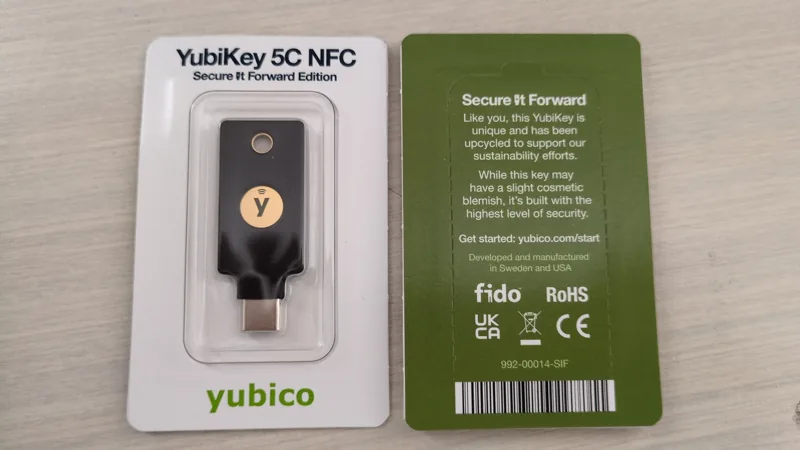
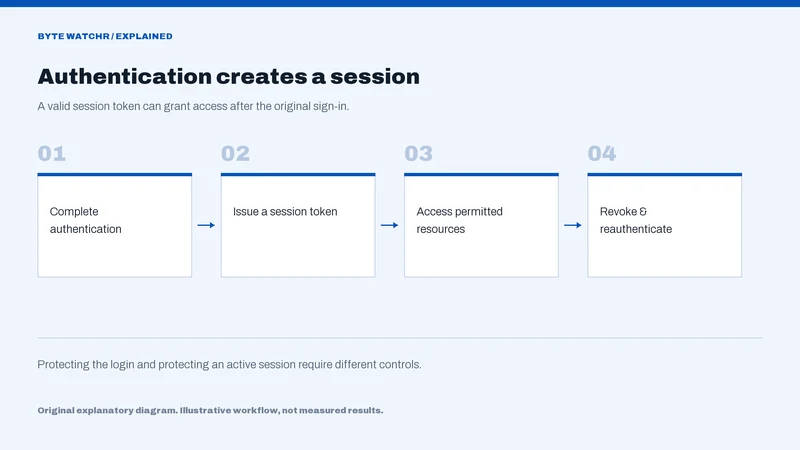
A successful login creates ongoing authority. Protecting that authority requires controls that extend beyond passwords and the moment of multifactor authentication.
The September announcement connected an infrastructure operation with notification and remediation, two parts of the story that deserve separate measures of progress.
A durable comparison begins with workload evidence, data flows, integration boundaries, and operating requirements. A model leaderboard cannot settle those questions.
Replacing permanent application keys can reduce exposure. The remaining work is to secure credential issuance, limit authority, and make the entire lifecycle observable.
Records, accounts, email addresses, and people are different units. Reading the denominator is essential to understanding the scale and consequences of an incident.
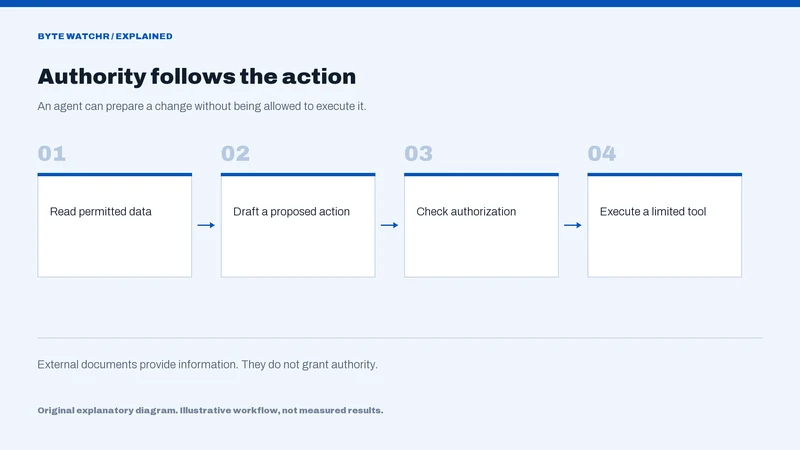
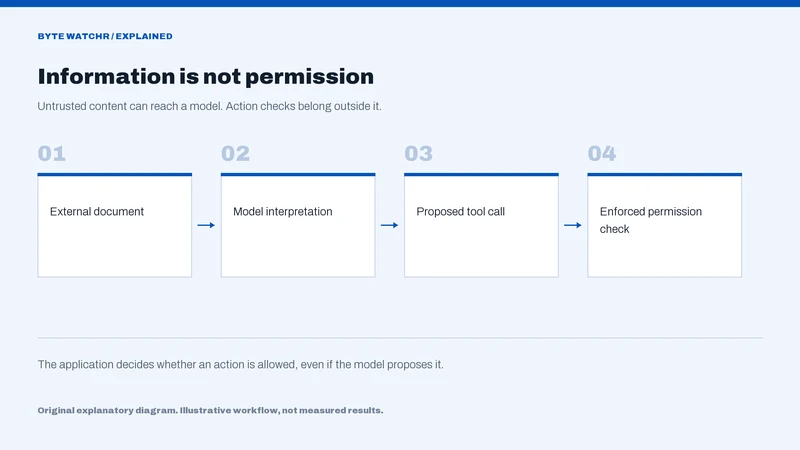
The useful design question is who may perform which action on which resource, under what conditions. Network location supplies context, not automatic permission.
Choosing a language is one decision. Reducing memory-safety risk also requires scoped projects, interface review, staff readiness, and evidence of progress.
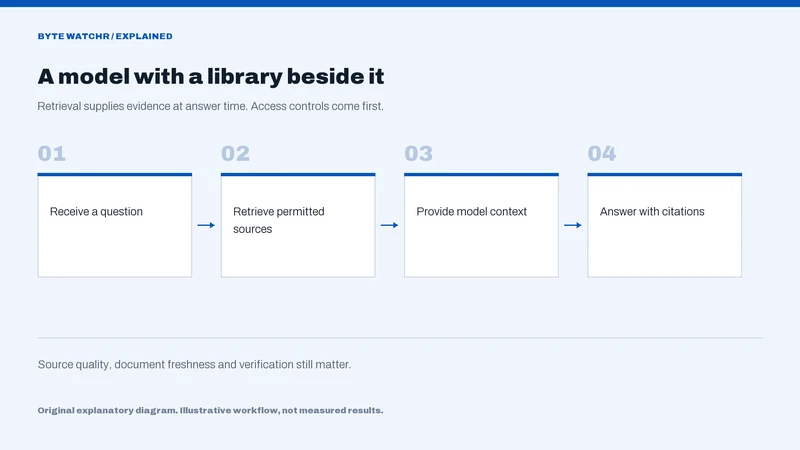
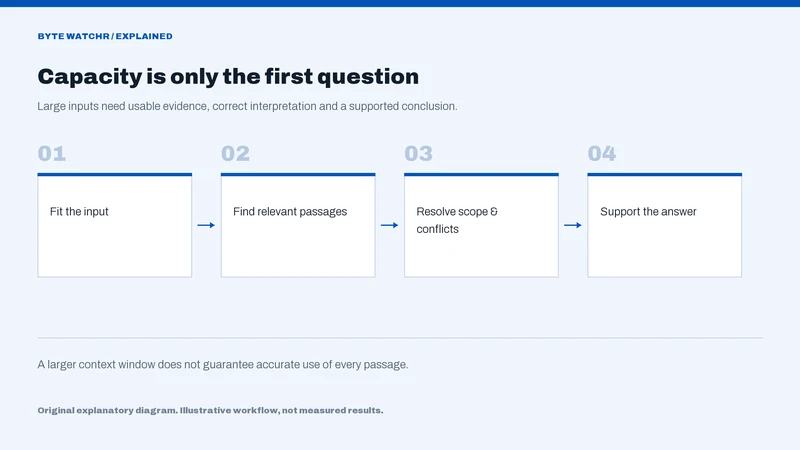
Retrieval-augmented generation can connect an AI model to reliable information. The difficult part is deciding which information deserves to be retrieved.
Cloud services can faithfully enforce the wrong permissions. The critical question is which identities can reach data, delegate access, and change the rules.
A model’s availability, its license, and the service built around it answer different questions. The business depends on what customers still need someone to operate.
A valid login does not prove that a caller may read or change a particular object. APIs need permissions that follow the record, action, and relevant fields.
Phishing-resistant sign-in is a major improvement. The harder design work begins when a person loses the devices and accounts that hold their credentials.
The May I/O announcements opened a useful debate about persistent search, notification quality, and the difference between a promise and a deployed service.
Turn a persuasive demonstration into a testable purchasing decision by specifying the job, the evidence, the data path, and the work that remains with your team.
The joint advisory made persistent access and the paths toward operational systems central concerns. Its enduring lesson is to examine what an intruder could eventually reach.
The April amendment is a useful case study in why cloud access, intellectual-property rights, revenue sharing, and ownership should be read separately.
The early response should stop continuing harm, preserve evidence, and create a reliable decision process. A rigid countdown is less useful than clear ownership.
The visible model call is only one cost event. A useful financial model follows each customer task through retries, tools, review, and an accepted result.
Known exploitation is a powerful signal. A defensible remediation queue combines that signal with affected assets, exposure, consequence, and verified treatment.