
What to know
- Benchmark results depend on tasks, constraints and evaluation methods.
- Latency, accuracy and throughput need to be considered together.
- A purchasing decision needs representative workflows, including failure cases.
Read the conditions before the rank
A benchmark result is meaningful only in relation to the test that produced it. A system may answer short questions well while struggling to process an inconsistent document collection. A coding score may say little about reviewing a change in a mature repository with unusual conventions.
Ask what is being measured, how success is judged and which resources are allowed. If one configuration uses additional tools, repeated attempts or more computation, the comparison may answer a different question than the headline suggests. A score without its conditions is an incomplete product claim.
Speed has more than one shape
An interactive application cares about how long a user waits for the first useful output. A batch processing job may care about completed work over an hour. Higher throughput can come with more waiting for an individual request, particularly when a system batches work to keep hardware busy.
NVIDIA’s performance guidance explains that workloads can be constrained by different aspects of a GPU system. That is why a hardware specification alone cannot establish end-to-end application performance. Data movement, memory use and software choices all affect how a workload behaves.
The average hides difficult cases
A model that gets most routine tasks right may still be unreliable on the few cases that carry serious consequences. Aggregate accuracy does not show whether errors are concentrated around particular languages, document types, uncommon inputs or edge conditions.
Break a test set into useful slices and inspect failures. For an invoice tool, separate standard invoices from handwritten scans, unusual currencies and missing purchase orders. Record whether the system produces a detectable failure or a believable incorrect result. Those outcomes require different operational responses.
Evaluate the system around the model
A deployed product includes prompts, retrieval, permissions, tools, interfaces and review. Changing any of these can change outcomes. Anthropic’s discussion of agent architecture illustrates how workflow design influences cost and reliability even when the underlying model is unchanged.
Run the actual configuration that users will receive. Preserve the version of the model, prompts and supporting data used for each evaluation. When an update improves the headline score, check whether it also introduces a regression in a task that matters to the organization.
Turn comparison into a decision
A useful trial has a written acceptance rule. Specify the required completion quality, latency budget and acceptable intervention rate before reviewing results. Include switching costs, data handling and recovery options alongside technical performance.
Benchmarks are valuable starting points. Their role is to narrow the questions a buyer must test, rather than remove the need to test them. The right system is the one that meets the real workload’s requirements with tolerable cost and failure modes.
Sources & further reading
Factual statements are grounded in the linked material. Interpretation and illustrative examples are Byte Watchr analysis. Vendor claims are identified as claims, rather than independent testing.
This article belongs to Byte Watchr’s launch collection. The edition date organizes evergreen coverage and does not imply historical publication. Actual publication is recorded above.
Corrections policy · About this byline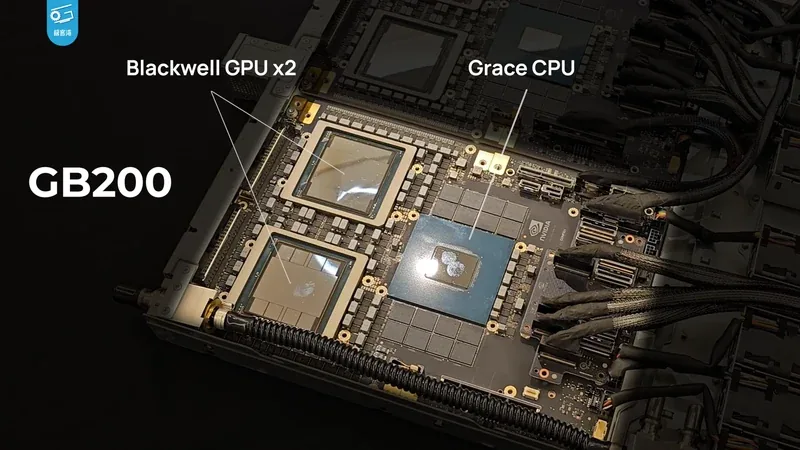


_025.png)