What to know
- Twelve new Phase II awards total $159 million.
- DOE also selected six additional Phase I projects.
- The selections complete a first-year portfolio of 297 projects.
A broad set of scientific applications
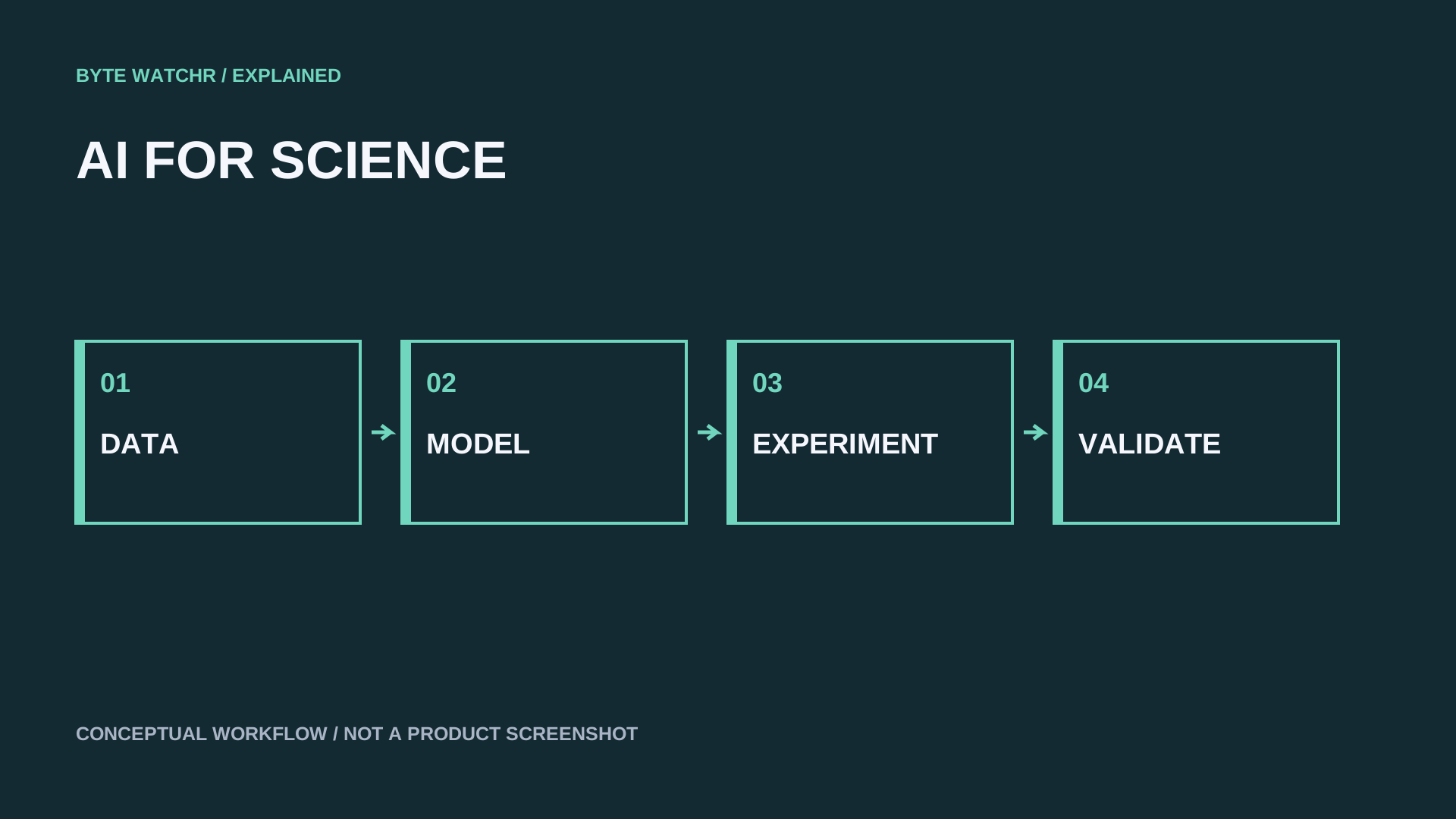
The Department of Energy announced twelve new Phase II Genesis Mission awards totaling $159 million on October 8, alongside six additional Phase I selections. Projects include a fusion digital twin, RNA structure data, geothermal reservoir reasoning, enzyme design, chip development, accelerator operations, quantum error correction and scientific software modernization.
DOE says the selections complete a first-year portfolio of 297 projects. The awards support approaches combining machine intelligence, scientific expertise, data and supercomputing. They are investments in research programs rather than announcements of completed discoveries. The department’s use of “Super Intelligence” is program terminology, not independent proof that the funded models possess general superhuman intelligence.
Source: DOE: New Genesis Mission awards
Each project needs its own success standard
A model that helps modernize scientific software and a model that proposes an enzyme design face different acceptance criteria. The software must preserve correct behavior and maintainability. The biological proposal needs experimental validation. A common funding umbrella should not obscure those differences or encourage all projects to report the same generic model benchmark.
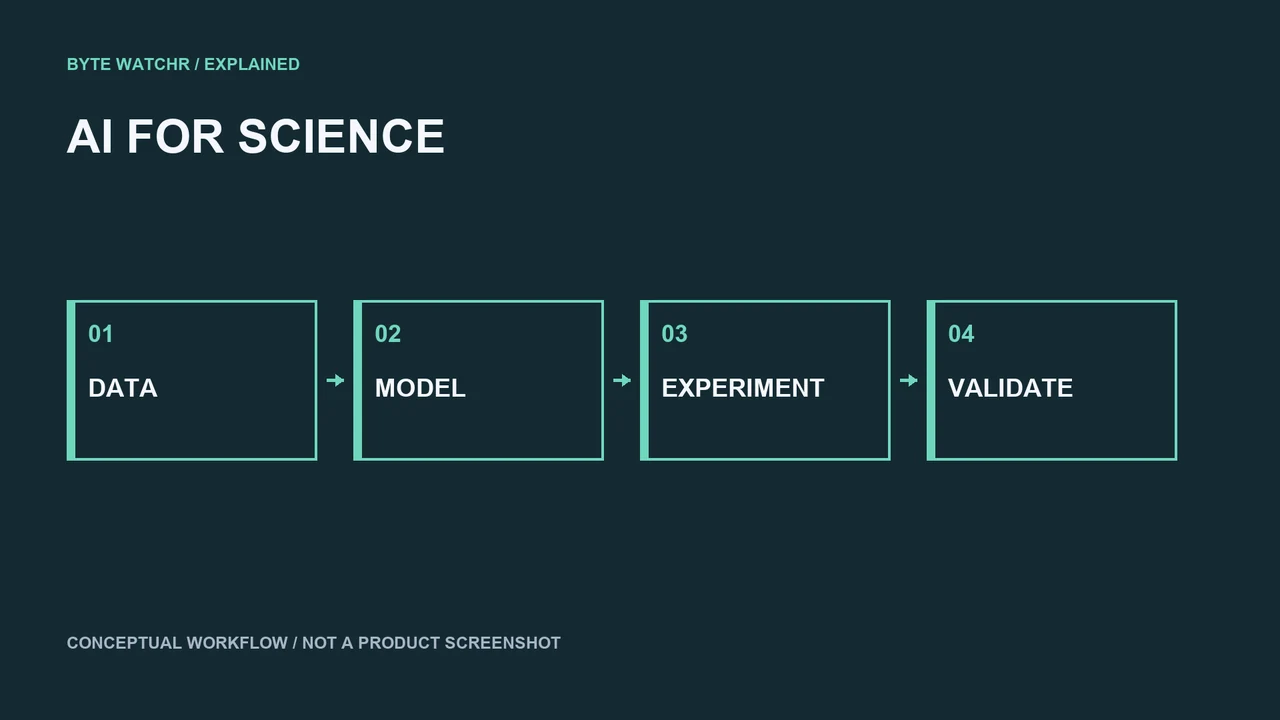
The strongest evaluation starts with the scientific task. What observation or computation will become more reliable, faster or newly possible? What baseline will establish that improvement? Those questions connect AI capability to a research objective. Without them, a project can report impressive activity while leaving its intended contribution difficult to assess.
Data quality is another shared dependency. Scientific datasets can contain uneven sampling, measurement uncertainty and incompatible formats. A model may learn those limitations rather than overcome them. Project reporting should explain the data’s provenance and the tests used to detect misleading patterns, especially when generated outputs guide later experiments or operational choices.
Funding should lead to inspectable results
The Phase II projects should produce evidence appropriate to their domains, including reproducible methods and clear accounts of failure. Negative results can be valuable when they establish where a proposed approach does not work. Reporting only successful demonstrations can hide the conditions under which a method becomes unreliable.
Software and infrastructure outputs also need maintenance plans. A prototype can be useful during a funded project and difficult to sustain afterward. Documentation, versioning and responsibility for updates determine whether the work becomes a durable resource for other researchers. Those commitments should be assessed alongside initial performance.
Byte Watchr’s assessment is that the awards are most meaningful when read as a portfolio of concrete research workflows. The breadth creates opportunities for AI to support several kinds of scientific work, but it also requires distinct validation standards. Future evidence should show what each project delivers, how its results were checked and whether other teams can use or reproduce the resulting capability.
Sources & further reading
Factual statements are grounded in the linked material. Interpretation and illustrative examples are Byte Watchr analysis. Vendor claims are identified as claims, rather than independent testing.
The event date records the source announcement or documented operation. The coverage edition groups recent developments and is separate from the publication date. Actual publication is recorded above.
Corrections policy · About this byline