What to know
- The validator checks managed settings and team mappings.
- Errors identify the affected file and configuration path.
- A valid configuration still needs a behavioral enforcement check.
Configuration errors become more visible
GitHub introduced an in-product validator for enterprise-managed Copilot settings on September 25. It checks malformed JSON, unsupported configurations and invalid team mappings, among other errors that can prevent policies from being enforced. Reported issues identify the affected file and JSON path.
The validator covers the central managed-settings file, team mappings and referenced team settings. GitHub directs administrators to correct the configuration in the default branch of the enterprise’s private configuration repository and review the validation result again. This gives teams a more direct way to find errors in the policy distribution process.
Syntax is only one layer of policy
A file that parses correctly can still express the wrong policy. A team might receive a permissive setting intended for a different group, or a valid mapping might omit users who should be covered. Validation can expose certain structural problems, while the organization remains responsible for deciding whether the accepted configuration reflects its intended controls.
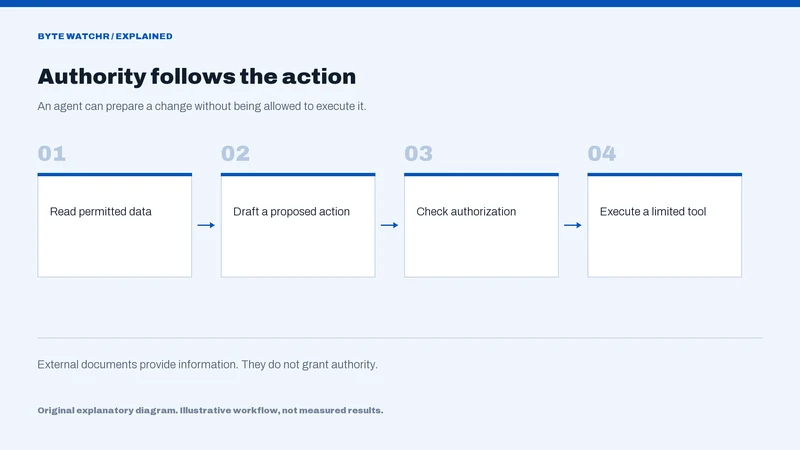
A practical review should therefore connect each policy to a testable behavior. If a setting is intended to restrict a capability, an administrator should verify the behavior from a representative client and account. The result should identify which policy applies and whether another setting can override it, rather than relying only on the presence of a configuration file.
Team changes deserve attention as well. People join and leave groups, repositories move and responsibilities change. A policy that was correctly mapped during setup may no longer cover the intended population. Periodic checks can focus on those transitions instead of repeatedly examining only the unchanged syntax.
Treat configuration changes as operational changes
Byte Watchr’s analysis is that centralized agent settings should be reviewed with the same care as other access-control configuration. A small edit can affect many users at once. Keeping the reason for a change, its reviewer and its expected result together makes the configuration easier to audit and less dependent on one administrator’s memory.
A controlled rollout can also help distinguish a policy problem from a client-version or connectivity issue. Testing with a small set of representative clients supplies evidence that the change has actually reached its destination. If the result differs from the intended behavior, the team can investigate before assuming that a successful validation means deployment is complete.
The new validator is a useful addition to that process. Its value lies in making a class of configuration failures easier to detect and correct. Effective governance still requires an explicit policy, an accurate assignment of that policy to users and a check that the relevant applications behave as expected after the change.
Sources & further reading
Factual statements are grounded in the linked material. Interpretation and illustrative examples are Byte Watchr analysis. Vendor claims are identified as claims, rather than independent testing.
The event date records the source announcement or documented operation. The coverage edition groups recent developments and is separate from the publication date. Actual publication is recorded above.
Corrections policy · About this byline