What to know
- Home and Code are planned for the Frontier program.
- Autopilot is expanding through private preview.
- Persistent work creates an ongoing permissions and spending problem.
Three modes with different release stages
Microsoft announced a revised Copilot experience on September 25, organized around Home, Code and Autopilot. Home brings chat and delegated work together, while Code is intended to help users build solutions. Autopilot is described as a persistent personal agent that can continue working between direct interactions.
Microsoft said Home and Code would begin rolling out through its Frontier program in the coming weeks and that Autopilot would expand in private preview at month-end. Those statements describe staged availability. They should not be interpreted as confirmation that every customer already has the complete experience.
Persistent work needs a durable mandate
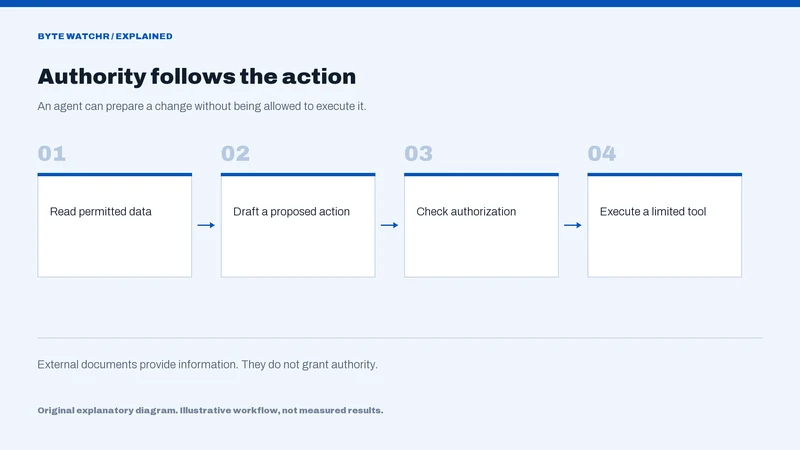
An assistant that responds to a single request has a relatively clear stopping point. An agent that continues working needs to know which objective remains active, how long it is authorized to pursue it and when it should ask for another decision. That mandate should be understandable to the user and enforceable by the surrounding system.
A practical design would make ongoing assignments visible, including their data access, spending limits and last meaningful action. Users need to be able to pause an assignment and understand what has already happened. If a task depends on a business condition that changes, the agent should have a defined way to recognize that the original instruction may no longer apply.
Memory also requires ownership. Information useful in one task may be obsolete, sensitive or inappropriate for another. A persistent assistant should not turn every past interaction into an indefinite assumption. Teams need a process for correcting retained context and checking which information is supplied to a particular action.
Building a solution does not finish its lifecycle
Byte Watchr’s analysis is that making solution creation accessible shifts more attention to what happens after the first version exists. A working application still needs an owner, access rules, maintenance and a way to recover from errors. Those responsibilities remain even when the initial implementation is created through a conversational interface.
An enterprise trial should therefore include a change to an existing solution, a failed dependency and a handoff to another employee. It should test whether a new owner can understand the application and its permissions without reconstructing the entire conversation that produced it. That evidence is more useful than the speed of the first demonstration alone.
Microsoft’s announcement describes a broader workplace role for Copilot, combining immediate assistance with persistent execution. The staged rollout gives customers an opportunity to evaluate each mode separately. Availability, controls and measured work outcomes should guide adoption, rather than treating the three names as a single capability with one shared level of readiness.
Sources & further reading
Factual statements are grounded in the linked material. Interpretation and illustrative examples are Byte Watchr analysis. Vendor claims are identified as claims, rather than independent testing.
The event date records the source announcement or documented operation. The coverage edition groups recent developments and is separate from the publication date. Actual publication is recorded above.
Corrections policy · About this byline