What to know
- Heathrow plans a new flagship website.
- Brand Visibility tracks citations and positioning across AI platforms.
- The announcement reports plans rather than measured passenger improvements.
Airport content has a new discovery surface
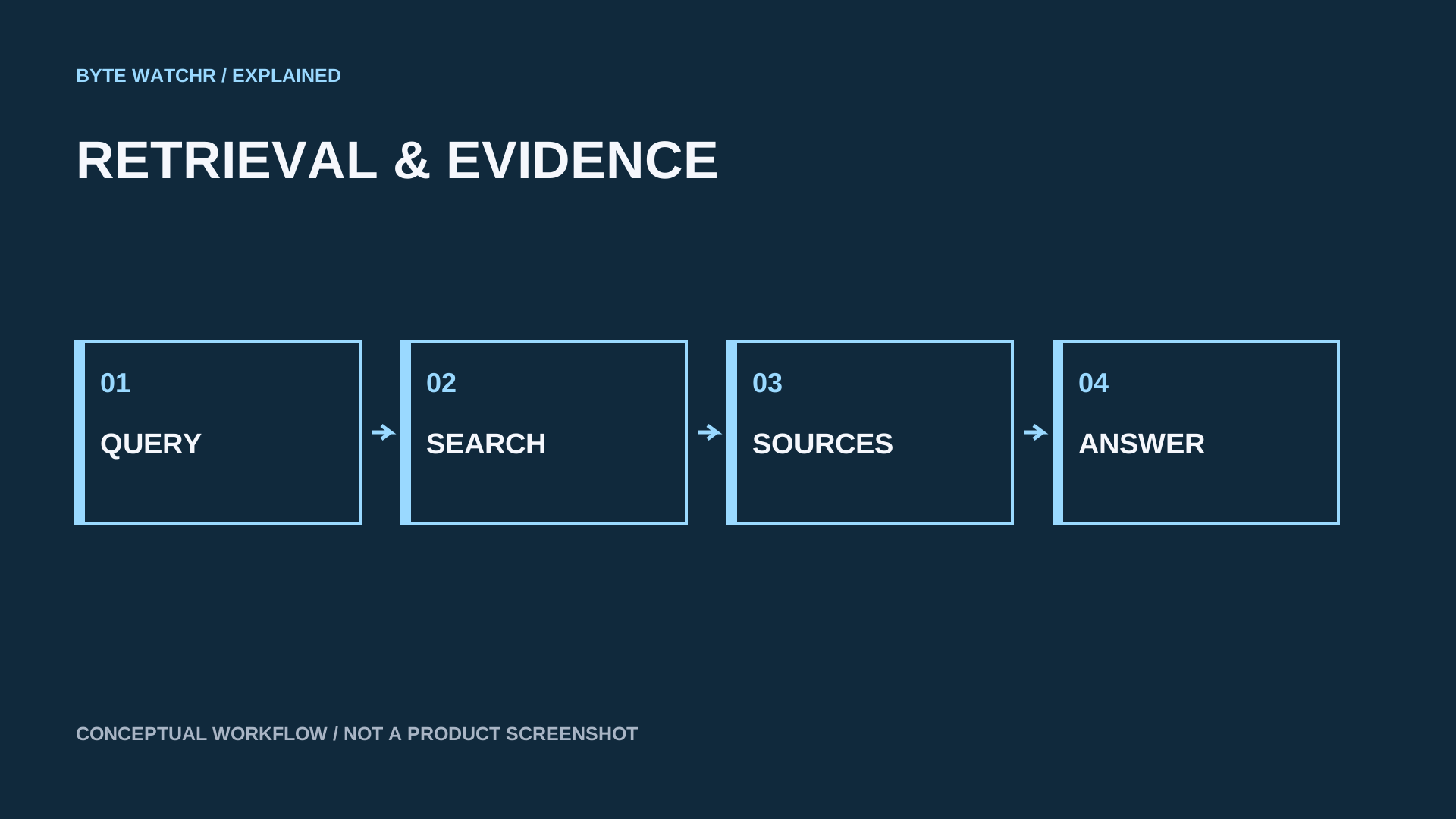
Adobe and Heathrow announced an expanded partnership on October 8 involving Adobe CX Enterprise, Experience Manager and Brand Visibility. Heathrow plans a new flagship website and more personalized passenger content. Brand Visibility will help track how airport information is cited and positioned across AI platforms and identify gaps in discovery.
Adobe says Heathrow’s website receives more than 50 million annual visitors and the airport serves more than 84 million passengers. The relationship extends over a decade. Brand Visibility itself was announced in June; the new event is Heathrow’s adoption partnership. The release does not report measured improvements in passenger outcomes from the planned changes.
Measure usefulness for the traveler
A practical evaluation should include common questions and difficult edge cases. Can a traveler identify the right terminal guidance, find assistance information and distinguish an airport service from an airline requirement? Completion of those tasks gives more useful evidence than traffic alone. Accessibility and mobile usability should be included because passengers often search while moving.
AI visibility metrics should be paired with source-quality checks. A citation can be correctly attributed while the surrounding answer is incomplete. Recording the query, platform, date and cited page makes recurring errors easier to diagnose. It also helps teams distinguish a content gap they can fix from behavior controlled by an external platform.
Byte Watchr’s assessment is that Heathrow’s partnership reflects a broader shift from optimizing a website alone to maintaining information across several discovery channels. The announcement establishes the tools and intended direction. Success will depend on fresh authoritative content and evidence that passengers receive useful, accurate guidance, rather than simply a stronger presence in generated answers.
Sources & further reading
Factual statements are grounded in the linked material. Interpretation and illustrative examples are Byte Watchr analysis. Vendor claims are identified as claims, rather than independent testing.
The event date records the source announcement or documented operation. The coverage edition groups recent developments and is separate from the publication date. Actual publication is recorded above.
Corrections policy · About this byline