What to know
- The pilot targets approximately 100 doctoral fellows.
- It proposes accelerated four-year doctoral pathways.
- Planned funding is up to $100 million, with outyears subject to appropriations.
Training for a combined discipline
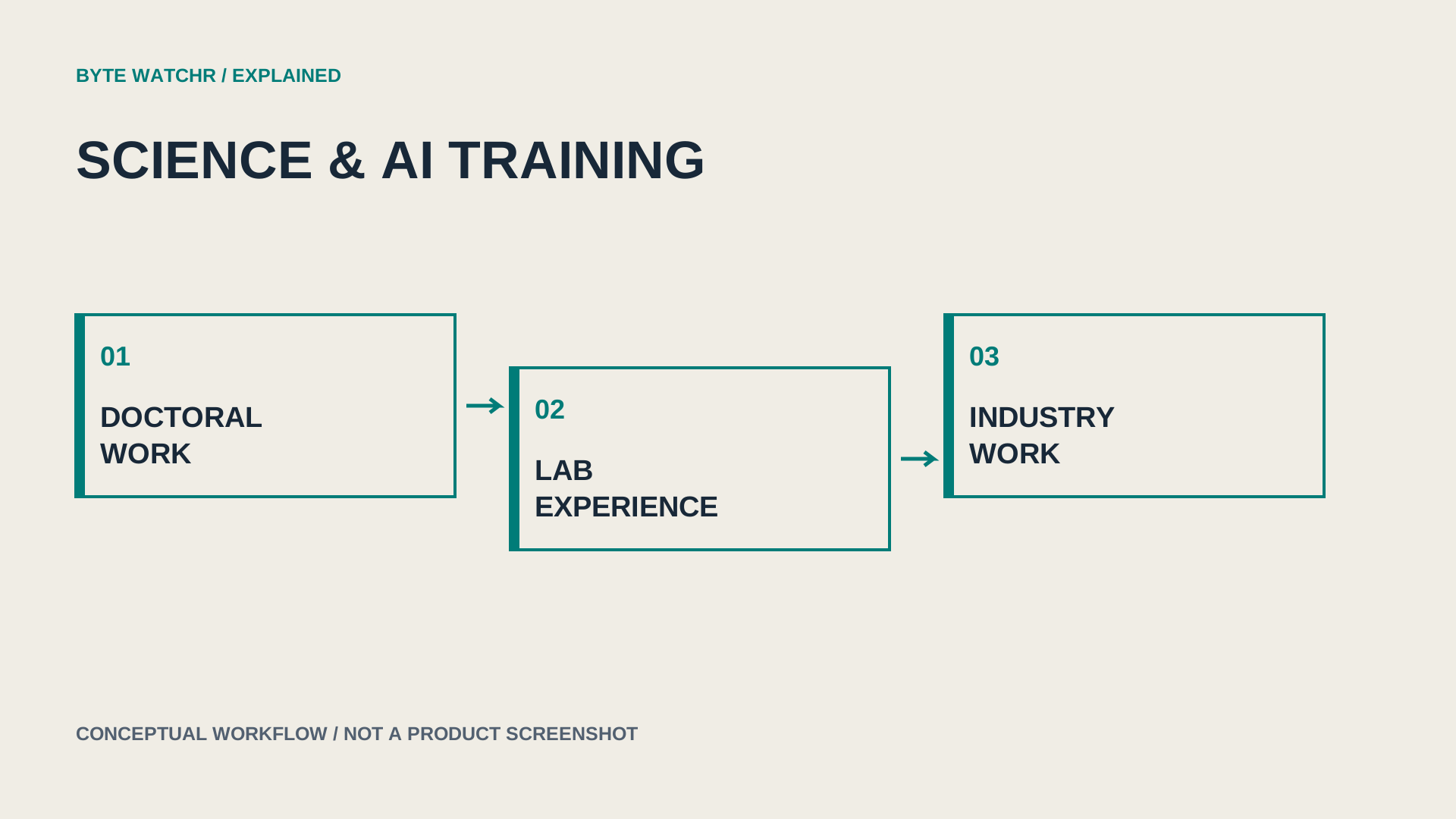
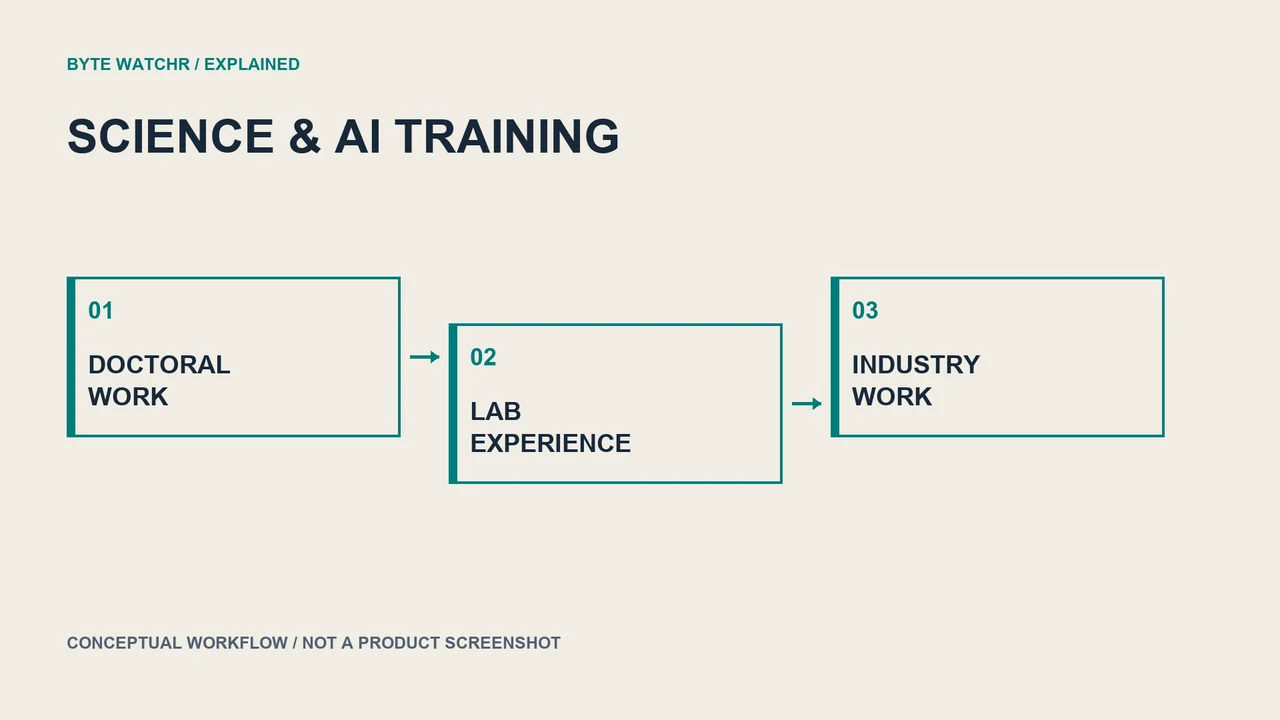
DOE launched its Genesis Mission Graduate Fellowship Pilot on October 8, targeting approximately 100 doctoral fellows trained in advanced machine intelligence and scientific or engineering disciplines. Domestic doctoral institutions will lead projects built around accelerated four-year pathways. Fellows are expected to complete one research experience at a DOE laboratory or user facility and another with an industry partner.
Planned funding is up to $100 million, including $20 million in fiscal 2027. Outyear support depends on congressional appropriations. A funding-opportunity webinar is scheduled for November 4. The announcement creates a pilot and proposed training structure; it does not establish that a cohort has already enrolled or completed the program.
Two kinds of expertise need to meet
Applying AI to science requires more than knowledge of model training. Researchers also need to understand how their discipline produces evidence, where measurements are uncertain and which assumptions a method permits. A model can generate a plausible result while violating a physical constraint or overlooking an experimental limitation. Domain expertise helps identify those failures.
The paired practical experiences could help connect methods with operational reality. A national laboratory offers research infrastructure and scientific workflows, while an industry setting can expose deployment and maintenance requirements. The value will depend on the substance of those placements, including mentorship and access to work that develops the intended skills.
Accelerated pathways also need a realistic workload. Combining disciplinary depth, AI methods and two external experiences within four years requires careful coordination. Institutions should make milestones and support clear so that speed does not replace rigor. The program’s success should be judged by the quality of training and research, not simply whether a shorter schedule was achieved.
Build an evidence-based training program
Evaluation can examine whether fellows learn to validate models against independent evidence, handle data responsibly and produce reproducible work. Those skills transfer across specific architectures and tools. A curriculum tied too closely to one rapidly changing product may become outdated before students complete the pathway.
The program also needs durable mentorship and funding expectations. Students should understand which support is committed, which depends on future appropriations and how institutions would handle a change. Clear information helps applicants compare the pathway with other doctoral options without assuming the announced maximum funding is guaranteed throughout their studies.
Byte Watchr’s assessment is that the fellowship addresses a workforce need at the intersection of AI and scientific practice. Its design connects academic training to laboratory and industry work, while the pilot stage leaves implementation details to establish. The next milestones are funded institutional projects, a selected cohort and evidence that the combined pathway produces rigorous researchers able to evaluate as well as build AI systems.
Sources & further reading
Factual statements are grounded in the linked material. Interpretation and illustrative examples are Byte Watchr analysis. Vendor claims are identified as claims, rather than independent testing.
The event date records the source announcement or documented operation. The coverage edition groups recent developments and is separate from the publication date. Actual publication is recorded above.
Corrections policy · About this byline