What to know
- The laboratory is planned at Abcam.
- Scaled operation is expected in early 2027.
- Reported speed and output gains are forward-looking targets.
From proposed designs to experimental feedback
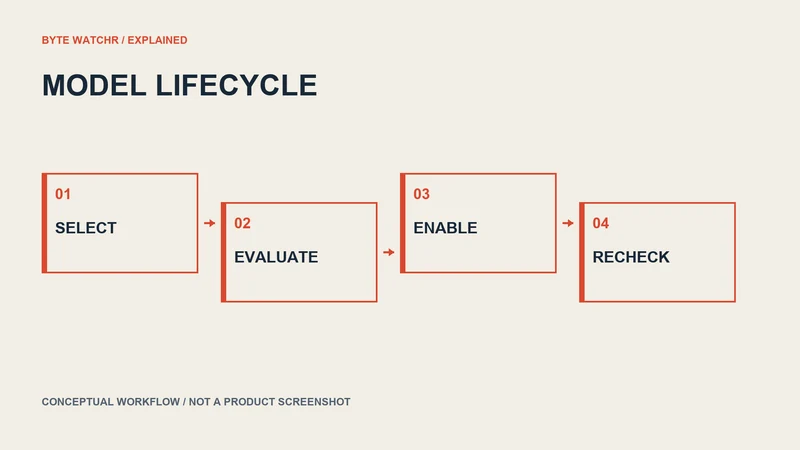
Danaher announced plans on October 7 for its first AI-powered autonomous laboratory, based at Abcam and expected to operate at scale in early 2027. The workflow will design affinity reagents, including antibodies, build and test them, then feed experimental results into later designs. Robotics and technologies from several Danaher businesses will contribute, with Automata supplying orchestration and automation.
The company describes targets of up to eightfold faster progress to validated reagents and up to tenfold greater reagent generation. Those are forward-looking objectives, not demonstrated production outcomes. Scientists are expected to retain key decisions. The announcement describes a planned research system rather than a clinical product or a completed discovery.
The experimental loop is the important unit
An AI design is useful only when the resulting material behaves as required. Automated construction and testing can shorten the time between a proposed reagent and evidence about it. The value of the loop depends on how experimental quality is maintained, including controls, calibration and reproducibility across batches.
A closed loop also needs to distinguish a failed hypothesis from a failed experiment. If a robotic step, instrument or sample preparation introduces an error, feeding the result back as reliable biological evidence can misdirect later designs. The system should retain the provenance of each result and flag runs that do not meet quality criteria before they influence the next iteration.
Scientists’ decision points should be explicit. Choosing an objective, accepting a candidate and deciding whether evidence supports further work are different responsibilities. Automation can perform repeated steps while leaving those judgments with researchers. That division should appear in the workflow and records, rather than being expressed only as a broad assurance of human oversight.
Measure validated outcomes
A useful performance comparison holds the validation standard constant. Producing more candidate reagents is not the same as producing more reliable reagents. Teams need measures for accepted performance, unsuccessful attempts, resource use and time to an independently reproducible result. Otherwise a faster generation stage can shift work onto the validation team without improving the full process.
Integration also deserves attention. Instruments, scheduling software and data systems must agree on sample identity and experimental state. A mismatch can create errors that are difficult to detect from the final summary. Traceable identifiers and recovery procedures become especially important when several devices execute a sequence without a person checking every handoff.
Byte Watchr’s assessment is that the project’s strongest idea is connecting AI proposals to physical evidence in a repeatable loop. The next milestone is scaled operation and measured validation results. Until then, the announced speed targets should remain targets, and the broader lesson is that useful laboratory autonomy requires experimental discipline as much as improved design models.
Sources & further reading
Factual statements are grounded in the linked material. Interpretation and illustrative examples are Byte Watchr analysis. Vendor claims are identified as claims, rather than independent testing.
The event date records the source announcement or documented operation. The coverage edition groups recent developments and is separate from the publication date. Actual publication is recorded above.
Corrections policy · About this byline