
What to know
- Barclays is expanding an existing collaboration with Anthropic.
- The rollout spans engineering and internal operational workflows.
- Adoption figures and verified business outcomes measure different things.
An expansion across distinct workflows
Barclays is widening its use of Claude across software development, legacy modernization and operations, according to an October 1 announcement from Anthropic. The bank expects Claude Code to reach half of its developer population by year-end. That is an adoption target, rather than a result already achieved.
Anthropic also describes an existing internal knowledge assistant used by more than 16,000 colleagues and an email-processing application in Global Markets handling approximately 120,000 messages daily. These examples involve different tasks and should be assessed separately. A tool that retrieves policy information does not face the same acceptance criteria as one proposing a software change.
Volume is a starting point for evaluation
The scale of an internal deployment can demonstrate that a tool fits into daily work. It does not, on its own, establish whether answers are accurate, whether staff spend less time resolving a case or whether errors reach customers. Those questions require comparisons between similar tasks and a record of the reviews and corrections that follow.
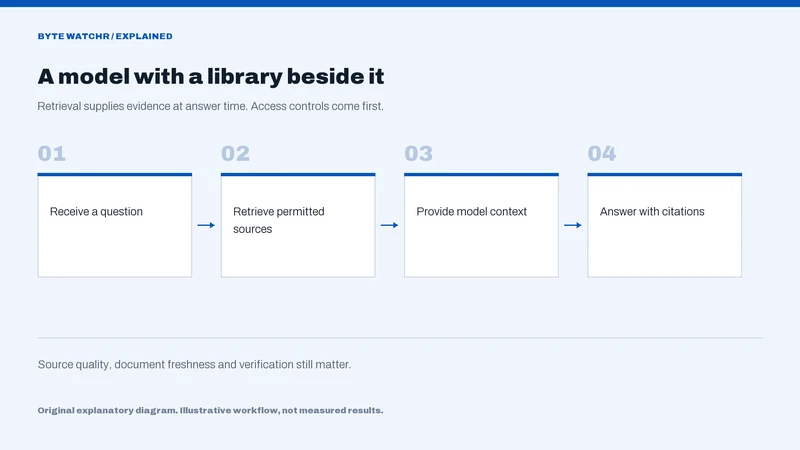
For a knowledge assistant, useful evidence would include whether the answer points to the current policy and whether the employee is entitled to see it. A short response that omits an exception may be less useful than a longer retrieval process that returns the controlling document. Teams also need a clear route for reporting an incorrect answer and removing obsolete material from the searchable collection.
Email classification raises another set of questions. Misrouting a routine message may cause a delay; misrouting a time-sensitive instruction can have a different consequence. An operational assessment should separate those classes, measure the frequency of manual reassignment and retain enough context to reconstruct why a message entered a particular queue.
Engineering changes need their own evidence
Byte Watchr’s analysis is that the bank’s expansion will be best understood through completed work, rather than a single aggregate usage figure. In software engineering, that means tracking whether proposed changes survive review, tests and deployment. It also means counting the work required to maintain generated code after the initial task ends.
Legacy systems make the evaluation more specific. A change can satisfy a visible requirement while disrupting an undocumented dependency. Teams need test cases drawn from actual interfaces and operational constraints, including systems that are difficult to reproduce outside production. AI assistance can accelerate preparation, but the organization still needs an accountable owner for the resulting change.
The announcement establishes the direction and intended reach of the collaboration. It does not provide a controlled comparison of the full bank’s operating performance. Future evidence on error rates, review effort and service outcomes would help distinguish widespread availability from a measurable improvement in how work is completed.
Sources & further reading
Factual statements are grounded in the linked material. Interpretation and illustrative examples are Byte Watchr analysis. Vendor claims are identified as claims, rather than independent testing.
The event date records the source announcement or documented operation. The coverage edition groups recent developments and is separate from the publication date. Actual publication is recorded above.
Corrections policy · About this byline

.jpg)