What to know
- Local sandboxing is available in public preview.
- The controls address agent access to local resources.
- The effective boundary depends on configuration and the complete tool path.
New controls around local execution
GitHub’s September 25 release summary announced local sandboxing in the Copilot app as a public preview. The feature is intended to limit agents’ access to files, networks and credentials. The same summary describes OpenTelemetry support for tracking agent activity through enterprise-managed settings.
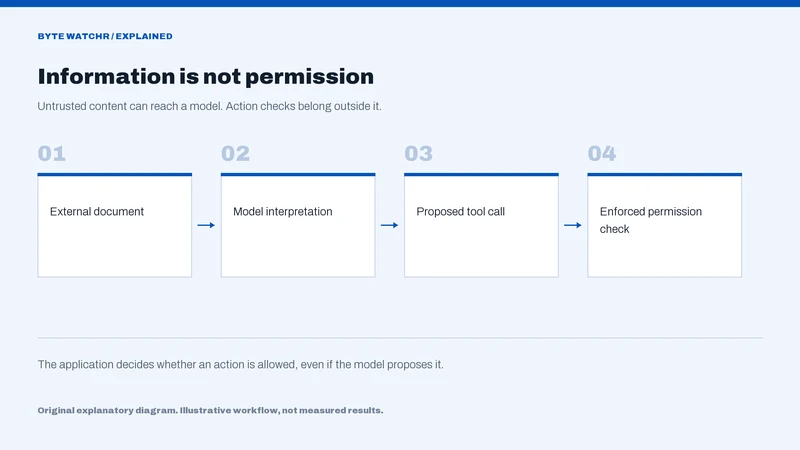
These additions address the environment in which a coding agent acts, rather than only the model producing its instructions. That is an important distinction for evaluation. A model can propose an unsuitable command even when it usually follows instructions, while an enforced execution boundary can limit what that command is able to affect.
The boundary should match the assignment
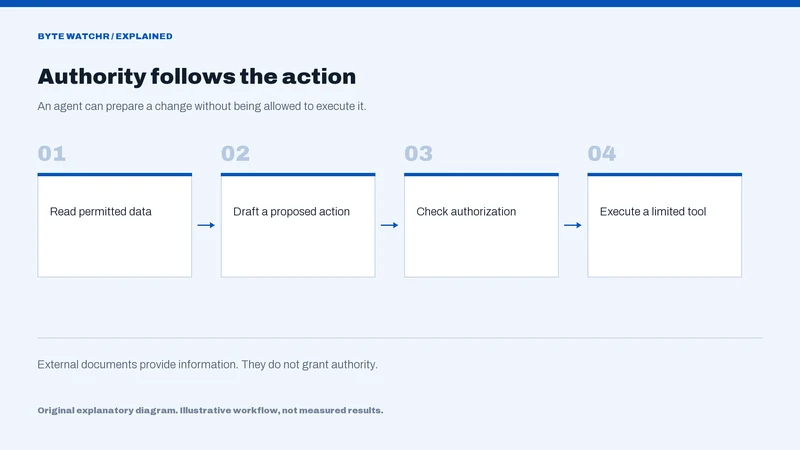
A useful sandbox gives a task enough access to complete its work without exposing unrelated resources. For a code change, that may mean a defined workspace, specific dependency sources and limited temporary credentials. Granting broad access simply to avoid occasional failures can remove much of the control the sandbox was introduced to provide.
Teams should test the full tool path. A command may invoke another program, contact a network service or read configuration outside the immediate repository. The operator needs to know whether those actions remain inside the intended restrictions. A boundary that only covers the first process may not describe the behavior of the complete workflow.
Exceptions should be visible and attributable. If a task needs broader access, the user should be able to understand the proposed expansion and its purpose. An exception that persists after the task ends can quietly change the environment for later work, so its lifetime belongs in the policy as well as its scope.
Observation helps verify the policy
Byte Watchr’s analysis is that activity records can make sandbox behavior easier to assess, provided they are interpreted carefully. A log showing an attempted action is different from evidence that the action succeeded. Teams should preserve the outcome and relevant policy decision so that reviewers can reconstruct both allowed and blocked behavior.
The records themselves may contain sensitive information. Logging a command, tool argument or file path can reveal details that should not be broadly accessible. An enterprise evaluation should therefore include retention, access and redaction rules alongside the technical integration with its monitoring tools.
The public preview gives developers a concrete way to test local execution controls around agent work. A meaningful trial would include expected operations and deliberately out-of-scope attempts, then confirm the observed behavior against the intended policy. That evidence is more useful than assuming the word sandbox guarantees a particular level of isolation or that a successful coding demonstration has exercised the boundary fully.
Sources & further reading
Factual statements are grounded in the linked material. Interpretation and illustrative examples are Byte Watchr analysis. Vendor claims are identified as claims, rather than independent testing.
The event date records the source announcement or documented operation. The coverage edition groups recent developments and is separate from the publication date. Actual publication is recorded above.
Corrections policy · About this byline