What to know
- Assign one incident lead and keep an evidence-based record of decisions.
- Containment should consider ongoing harm and the preservation of forensic evidence.
- Notification duties and deadlines depend on the incident and applicable obligations.
Confirm the signal and name the lead
The first report might be an alert, a customer complaint, or an unexpected file on a public service. Record what was observed, when it was observed, and who can provide the original evidence. Distinguish an initial allegation from confirmed unauthorized activity. Treat a credible signal seriously without turning every early assumption into a fact repeated throughout the organization.
Designate an incident lead with the authority to coordinate technical responders and the relevant business owners. Establish a secure communication channel and a decision log. NIST’s incident response guidance places preparation, detection, response, and recovery within wider risk management. In practice, the first day works better when participants know who decides, who acts, and who records what happened.
Source: NIST SP 800-61 Revision 3: Incident Response Recommendations
Contain the harm with evidence in mind
Determine whether information is still being exposed or accessed. The appropriate response may involve restricting a compromised identity, isolating an affected system, removing a public file, or interrupting a specific integration. The choice depends on the environment. Avoid treating every incident as a reason to shut down every service, especially where availability is itself important to safety or continuity.
The FTC advises businesses to preserve forensic evidence while stopping further loss. Coordinate consequential changes with qualified responders where possible. Before changing a system, record the reason and expected effect. A hypothetical database rebuild might restore service but destroy useful traces if performed carelessly. Equally, preserving an untouched machine is not a sufficient response when an active connection continues exposing information.
Build a timeline that admits uncertainty
Create a working chronology covering discovery, suspected access, containment actions, and any evidence of persistence. Keep observation time separate from event time. Note the timezone and the source of each entry. Mark estimates as estimates. A shared timeline prevents a confident retelling in one meeting from becoming an unsupported premise in the next decision.
Preserve relevant logs and other evidence under the organization’s handling procedures. Record collection methods and access to the material. Ask which important events were not logged and how long records remain available. The absence of an entry can have several explanations; it should not become automatic proof of absence. Focus investigation effort on uncertainties that could change containment or notice decisions.
Source: NIST SP 800-61 Revision 3: Incident Response Recommendations
Scope identities as well as machines
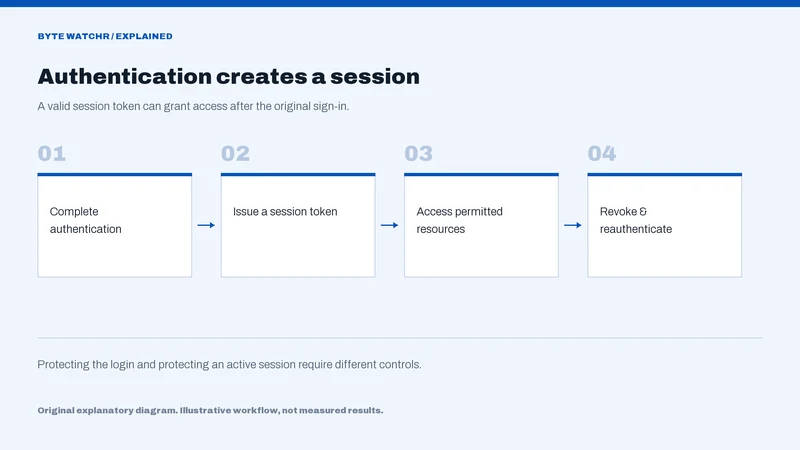
A compromised account may reach multiple services even when only one device first raised the alarm. Review the associated permissions, active sessions, access keys, connected applications, and recent administrative changes. Changing one password may be only part of containment. The response must account for the specific credential and session mechanisms that the affected services actually use.
Consider a hypothetical employee mailbox incident. Investigators should determine whether unauthorized access also created forwarding rules or granted another application access. The lesson is to trace what the identity could do and what it actually did, rather than equating the visible inbox with the entire incident. Restore access deliberately, with checks for persistence and unwanted permissions.
Source: NIST SP 800-63B: Authentication and Authenticator Management · OWASP: Session Management Cheat Sheet
Start the notification assessment early
Bring the appropriate privacy, legal, and contractual owners into the response while technical work continues. They need enough information to assess affected data, people, locations, customers, and service relationships. Requirements vary by jurisdiction and situation. There is no universal 24-hour notification rule that can safely be applied to every breach, nor a universal permission to wait until the investigation is complete.
Maintain a communication draft that clearly separates confirmed facts, unresolved questions, and protective actions. Avoid a reassuring conclusion that the evidence does not yet support. Identify where people will receive authoritative updates. A consistent public channel can reduce confusion when opportunistic messages begin circulating, but communications should also preserve information whose disclosure would increase risk or compromise the response.
End the day with an owned next step
At the first formal handover, document whether continuing access has been contained, which evidence is preserved, who remains affected, and which critical questions are open. Give each unanswered question an owner and a next review time. Record any temporary service restrictions and their business consequences so they do not remain in place through simple inertia.
The goal of the first day is a defensible operating position, not an artificial declaration that the incident is over. Recovery may require rebuilding trust in systems, verifying permissions, and observing behavior over time. Set the conditions for restoring normal operations and retain the ability to revise them as evidence changes. A controlled response makes uncertainty manageable without pretending it has disappeared.
Source: NIST SP 800-61 Revision 3: Incident Response Recommendations
Sources & further reading
- NIST SP 800-61 Revision 3: Incident Response Recommendations
- FTC: Data Breach Response, A Guide for Business
- NIST SP 800-63B: Authentication and Authenticator Management
- OWASP: Session Management Cheat Sheet
Factual statements are grounded in the linked material. Interpretation and illustrative examples are Byte Watchr analysis. Vendor claims are identified as claims, rather than independent testing.
This article belongs to Byte Watchr’s launch collection. The edition date organizes evergreen coverage and does not imply historical publication. Actual publication is recorded above.
Corrections policy · About this byline