What to know
- Confident wording is not evidence of factual accuracy.
- Verification should increase with the consequence of an error.
- Systems should have a usable way to say that evidence is missing.
Fluency and truth are different properties
A language model can write a coherent explanation without establishing whether every detail is true. It may produce a plausible reference, fill a gap with a familiar pattern or merge facts that belong to different contexts. These errors are often called hallucinations, although NIST’s generative AI profile also uses the term confabulation.
The practical problem is that many mistakes look like normal sentences. A fabricated invoice number does not need to sound strange. Neither does a nonexistent research paper or an incorrect product specification. Readers should evaluate the evidence behind an answer, not the confidence of its delivery.
Match checks to the decision
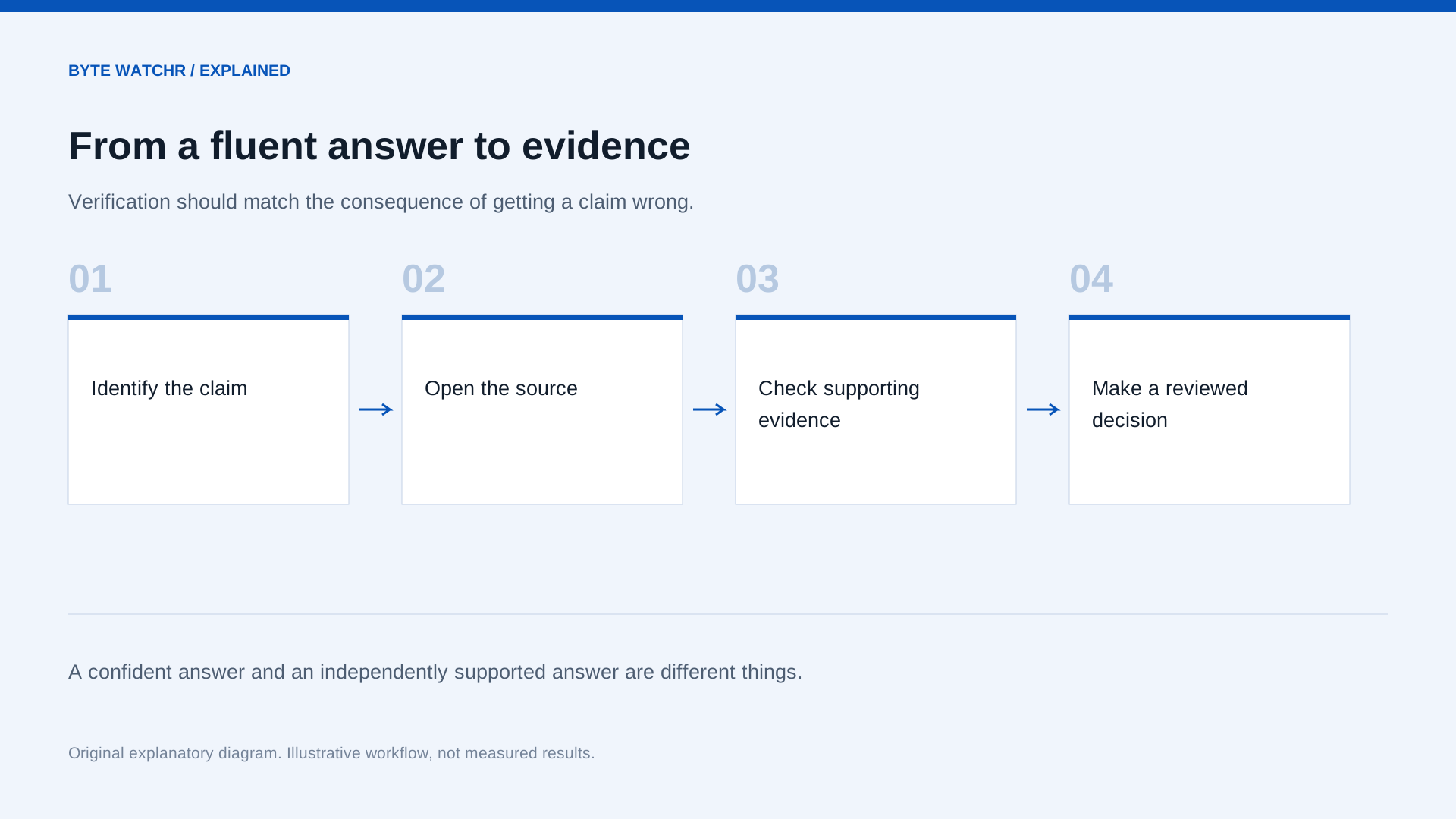
For brainstorming a title, an imperfect suggestion is easy to reject. For changing a production configuration, an incorrect explanation can cause an outage. The same model interface may serve both tasks, but the required verification is different.
Define the consequence before choosing the check. Technical instructions should be tested in an appropriate environment. A numerical result should be reproduced from the underlying data. A citation should be opened and compared with the claim it is supposed to support. A second model’s agreement is not equivalent to independent evidence.
Grounding helps within limits
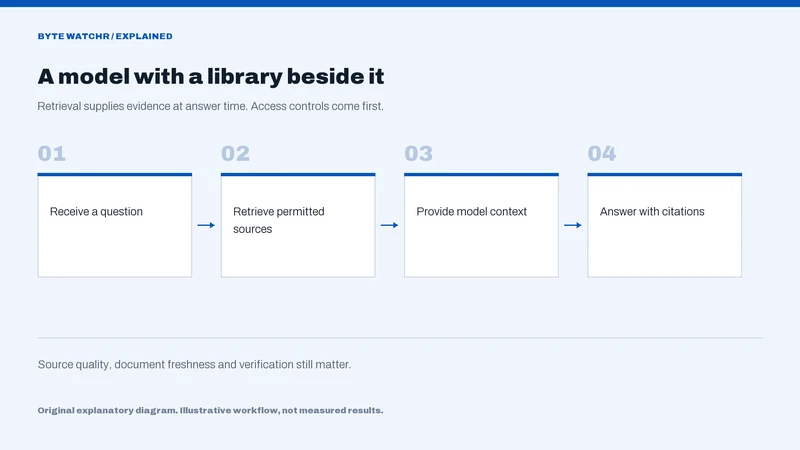
Retrieval can give a model access to approved documents, reducing its need to rely on general training knowledge. It also creates new ways to be wrong. The retrieved passage may be outdated, the search may miss an exception or the answer may combine two incompatible policies.
A useful interface lets the reader inspect the exact supporting material. For changing information, show the document’s date and scope. Keep the distinction between a retrieved fact and an analytical conclusion visible, especially when the conclusion depends on assumptions the source does not address.
Evaluate missing answers
Teams often test only questions that have known answers. That can reward a system for responding confidently to everything. Add cases where the relevant information is unavailable, ambiguous or contradictory. Check whether the system asks for clarification or declines to make a factual claim.
Measure the cost of a wrong answer separately from the inconvenience of an unanswered question. In a customer support workflow, unnecessary escalation is expensive, but an invented contractual commitment may be more expensive. The correct balance depends on the task and the organization’s obligations.
Build a habit, then build a control
Readers can make a simple distinction: use a generated answer as a draft until the consequential parts have been verified. Organizations should make that habit easier through source links, test environments, review queues and explicit ownership of final decisions.
A model can be useful without being authoritative. The more clearly a system shows what it knows, where that knowledge came from and when it has insufficient evidence, the easier it becomes to use its strengths responsibly.
Sources & further reading
Factual statements are grounded in the linked material. Interpretation and illustrative examples are Byte Watchr analysis. Vendor claims are identified as claims, rather than independent testing.
This article belongs to Byte Watchr’s launch collection. The edition date organizes evergreen coverage and does not imply historical publication. Actual publication is recorded above.
Corrections policy · About this byline