What to know
- A visible network origin does not settle the identity behind an operation.
- Short-lived indicators require careful interpretation of time and coverage.
- Attribution, detection, and remediation answer different questions.
What was confirmed
On April 23, 2026, the UK's National Cyber Security Centre issued guidance with industry and 15 international partners. It described China-linked actors using covert networks of compromised routers and other edge devices to obscure malicious activity.
The NCSC said these networks supported data theft and persistent access, and warned that indicators of compromise could disappear rapidly. Its account also described outside Chinese information-security companies maintaining networks for these actors. This retrospective treats those statements as the issuing agencies' assessment.
Source: International cyber agencies share fresh advice to defend against China-linked covert networks
Analysis: An observation is smaller than a conclusion
A connection record can be useful without answering every question an investigator cares about. Where traffic was observed is one question. Who caused it, why it occurred, and whether it represents an ongoing intrusion are others. The analytical risk is promoting one observation into a broader conclusion without preserving the steps that connect them.
Consider a hypothetical alert involving an apparently familiar network location. Familiarity might explain why the activity initially attracts less attention, but it would not establish authorization. Equally, an unfamiliar location would not by itself identify a particular state or criminal group. An investigation needs a way to keep those possibilities open while testing what the available evidence actually supports. The advisory makes that distinction especially relevant.
Analysis: Time changes the meaning of an indicator
An indicator has a useful life that may differ from the lifetime of the campaign associated with it. A historical match could be important context without proving present control. A clean result from a current lookup could leave earlier activity unexplained. Treating every check as timeless would make both conclusions harder to assess.
One useful review question is therefore: what period does this evidence describe? Another is: what did the observation process cover? If a team has data for only part of a relevant period, the missing interval should remain visible in its reasoning. These are questions about analytical completeness, not claims that a particular monitoring product will detect or prevent the activity described by the NCSC.
Analysis: Responsibility crosses several boundaries
A compromised device creates at least two possible perspectives: the owner's concern about that device and another organization's concern about activity passing through it. Those concerns overlap, but the evidence and available actions may differ. A response organized solely around the final destination could miss questions about how the intermediate system came to be involved.
This creates a coordination problem in a hypothetical incident. Who can verify device ownership? Who can investigate the activity observed elsewhere? What information can be shared usefully, and what uncertainty must accompany it? A clear handoff would distinguish a confirmed observation from a suspected connection. That discipline matters because a recipient may otherwise interpret an alert as a complete finding rather than a lead requiring examination.
What remains unproven or unknown
The public release is a warning about a recurring method. It does not establish that every compromised consumer device shares an operator, or that any particular organization has been affected. Byte Watchr has not independently examined the agencies' underlying evidence for this article.
Several limitations should remain visible in any retelling. A named threat category can organize information, but it does not remove uncertainty from individual events. An agency assessment is stronger evidence of what the agency concluded than a news summary is of the underlying technical case. Readers seeking operational detail should consult the original advisory and evaluate its applicability to their environment, rather than deriving a configuration change from this analysis.
Source: International cyber agencies share fresh advice to defend against China-linked covert networks
Practical implications: Preserve the chain of reasoning
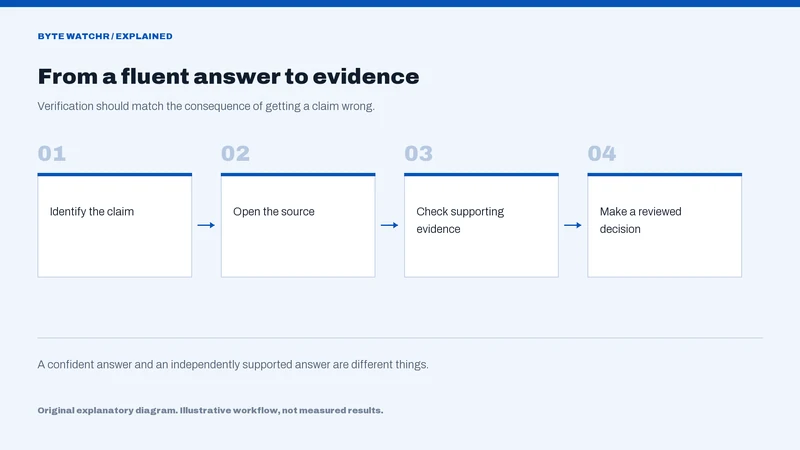
A useful internal discussion could ask an analyst to state the observation, its date, the inference drawn from it, and at least one plausible alternative explanation. That structure would make disagreement productive: another reviewer could challenge a specific step instead of accepting or rejecting the entire conclusion.
The same discipline improves public reporting. Describing an agency's attribution explicitly, keeping incident scope separate from general warnings, and recording what remains unknown helps readers understand the significance without exaggerating certainty. The April announcement warrants attention because of the investigative problem it describes. Its value is weakened if the story turns that problem into a claim that a single address or label can settle an attack's origin.
Sources & further reading
Factual statements are grounded in the linked material. Interpretation and illustrative examples are Byte Watchr analysis. Vendor claims are identified as claims, rather than independent testing.
This article belongs to Byte Watchr’s launch collection. The event date records the source announcement or documented operation. Actual publication is recorded above.
Corrections policy · About this byline