What to know
- Power is a rate; energy accumulates over time.
- Efficiency per task can improve while total demand grows.
- Global totals do not settle the constraints facing a particular location.
The documented foundation
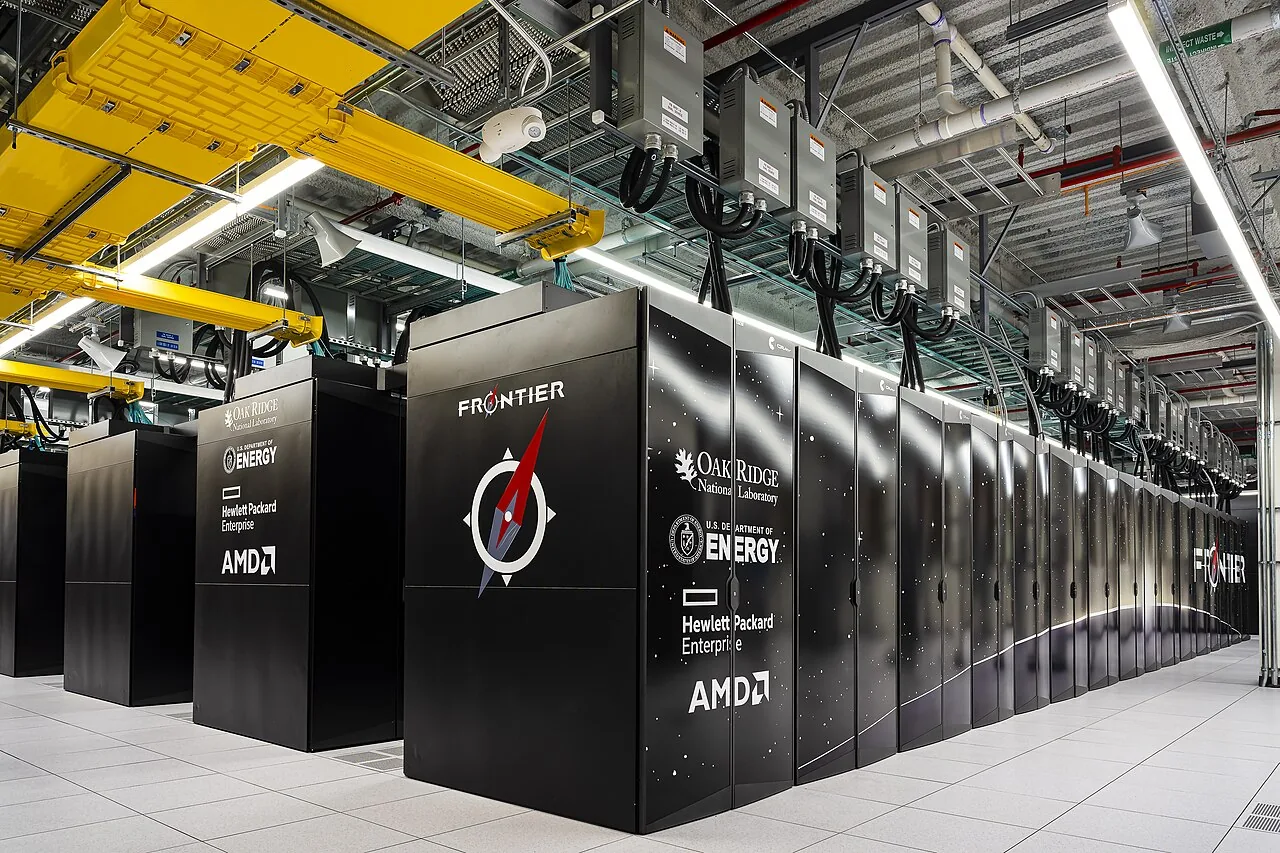
The IEA's 2025 Energy and AI report emphasized that data centers' local electricity impacts can be much larger than their share of global consumption suggests. It examined different paths for uptake, efficiency, and energy-sector constraints.
In its 2026 update, the IEA estimated data-center electricity consumption at 485TWh in 2025 and projected roughly 950TWh in 2030. Those figures concern data centers broadly, not AI alone. The latter is a projection rather than a measured future outcome. The enduring lesson is to preserve the scope, date, and assumptions attached to a number.
Source: IEA Energy and AI: executive summary, 2025 · IEA Key Questions on Energy and AI: executive summary, 2026
Power and energy answer different questions
Power describes a rate of use. Energy describes the amount used over an interval. In a deliberately simple example, a facility drawing a constant one megawatt for 24 hours uses 24 megawatt-hours. If its load varies, the total depends on that variation. This arithmetic example is not a claim about a real facility.
The distinction matters when a headline moves between planned connection capacity and annual consumption. A connection figure does not establish that the site operates at that level every hour. An annual total does not reveal the largest instantaneous demand. Both can be useful, but they support different questions about capacity, utilization, and the timing of service.
Analysis: Efficiency needs a denominator
A task can require less energy while the total number or complexity of tasks increases. Suppose a hypothetical service halves the energy required for a fixed task and then performs three times as many of those tasks. Its total becomes one and a half times the original amount. Better efficiency and higher consumption can therefore coexist without a contradiction.
The next question is what counts as the same task. A short answer, a long research process, and a generated video should not be combined into a single universal query without explaining the mixture. The IEA's 2026 discussion emphasizes changing use cases alongside efficiency and adoption. An informative comparison would preserve the workload definition instead of allowing it to change silently between measurements.
Source: IEA Key Questions on Energy and AI: executive summary, 2026
Analysis: Location changes the planning problem
A global estimate can help describe scale, but a proposed facility has to operate somewhere specific. A planning discussion would need to consider the available connection, the timing of additional infrastructure, and the demand already present in that location. A favorable worldwide percentage would not answer those site-level questions.
Equally, a difficult local project would not establish that every location faces the same constraint. The useful analysis moves between scales without substituting one for another. For a hypothetical development, the relevant evidence might include a phased load schedule and the infrastructure needed for each stage. That would make the timing assumptions visible instead of presenting eventual capacity as if it were immediately available.
Be explicit about the measurement boundary
An energy figure needs a boundary around what it includes. A narrow computation measurement and a facility total can both be valid while answering different questions. Comparing them without describing the boundary would create an apparent disagreement that may be mostly definitional.
A practical reporting template could state the workload, observation period, included equipment or services, and whether the number was measured or modeled. It could also disclose whether unused capacity was allocated across tasks. This is a proposed analytical method, not a universal measurement standard. Its purpose is to let another reader reconstruct the claim and identify which omitted factors might matter to their own question.
What forecasts cannot settle
The IEA presents scenarios because the future depends on uncertain adoption, efficiency, investment, and infrastructure conditions. A forecast should therefore be read as a conditional account of how those factors may combine. It cannot certify the outcome of a particular project or the environmental effect of a particular application.
For readers assessing an energy claim, the most useful first questions are concrete: which year, which geography, which workload, and which boundary? After that, ask what would change the estimate. A clear answer may be less dramatic than a single enormous total, but it supports a more useful discussion. It can show where additional evidence is needed and distinguish an engineering constraint from a projection or a choice about how technology is used.
Source: IEA Energy and AI: executive summary, 2025 · IEA Key Questions on Energy and AI: executive summary, 2026
Sources & further reading
- IEA Energy and AI: executive summary, 2025
- IEA Key Questions on Energy and AI: executive summary, 2026
Factual statements are grounded in the linked material. Interpretation and illustrative examples are Byte Watchr analysis. Vendor claims are identified as claims, rather than independent testing.
This article belongs to Byte Watchr’s launch collection. The edition date organizes evergreen coverage and does not imply historical publication. Actual publication is recorded above.
Corrections policy · About this byline


.jpg)