What to know
- An agent’s tools and permissions determine the consequences of a mistake.
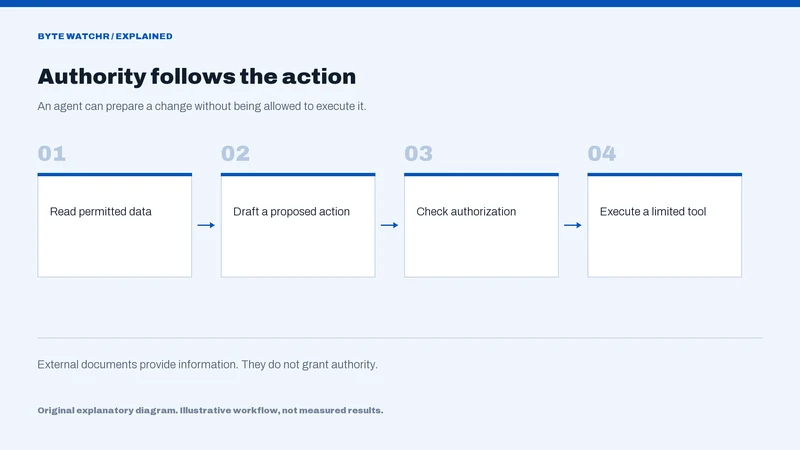
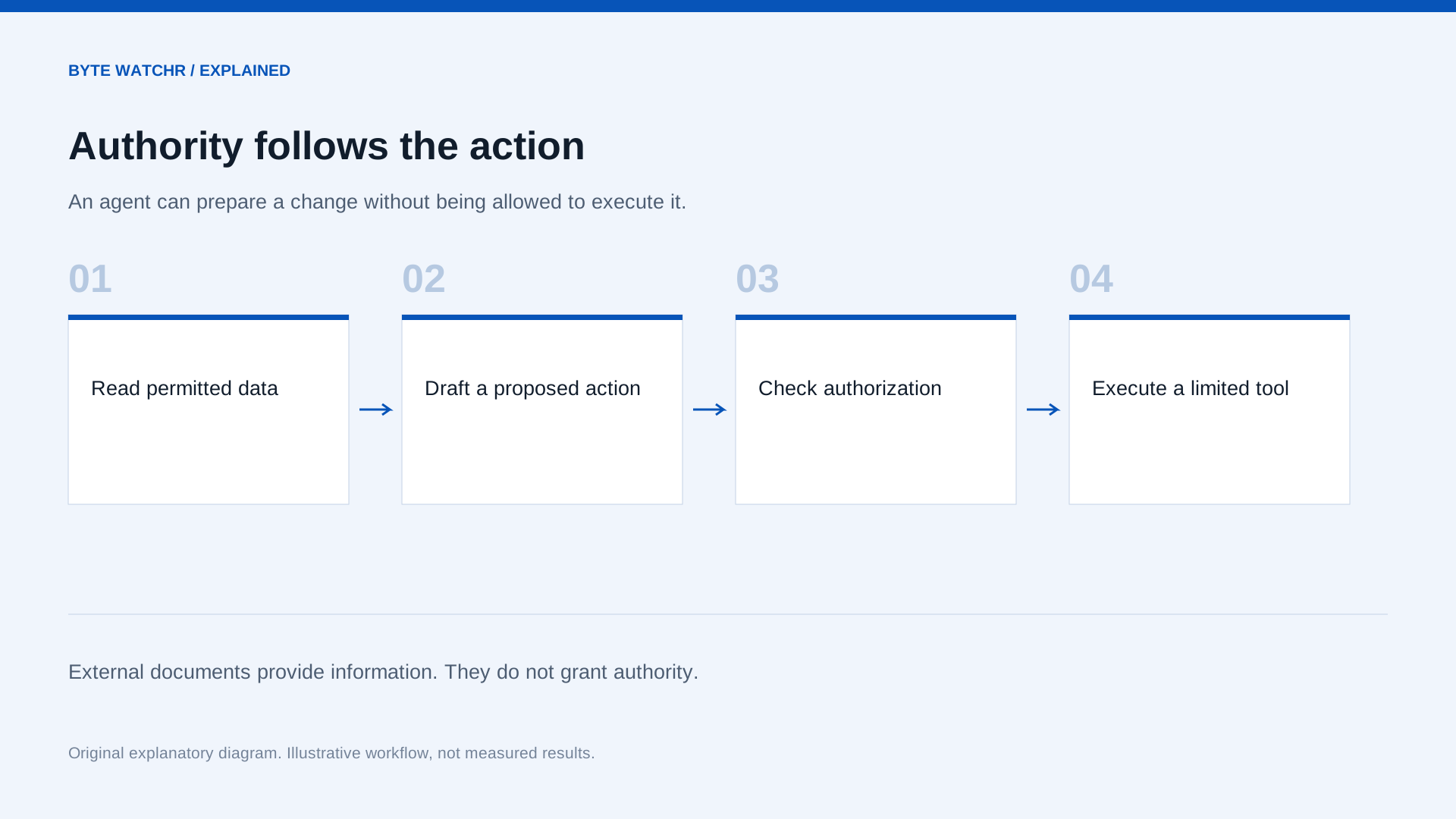
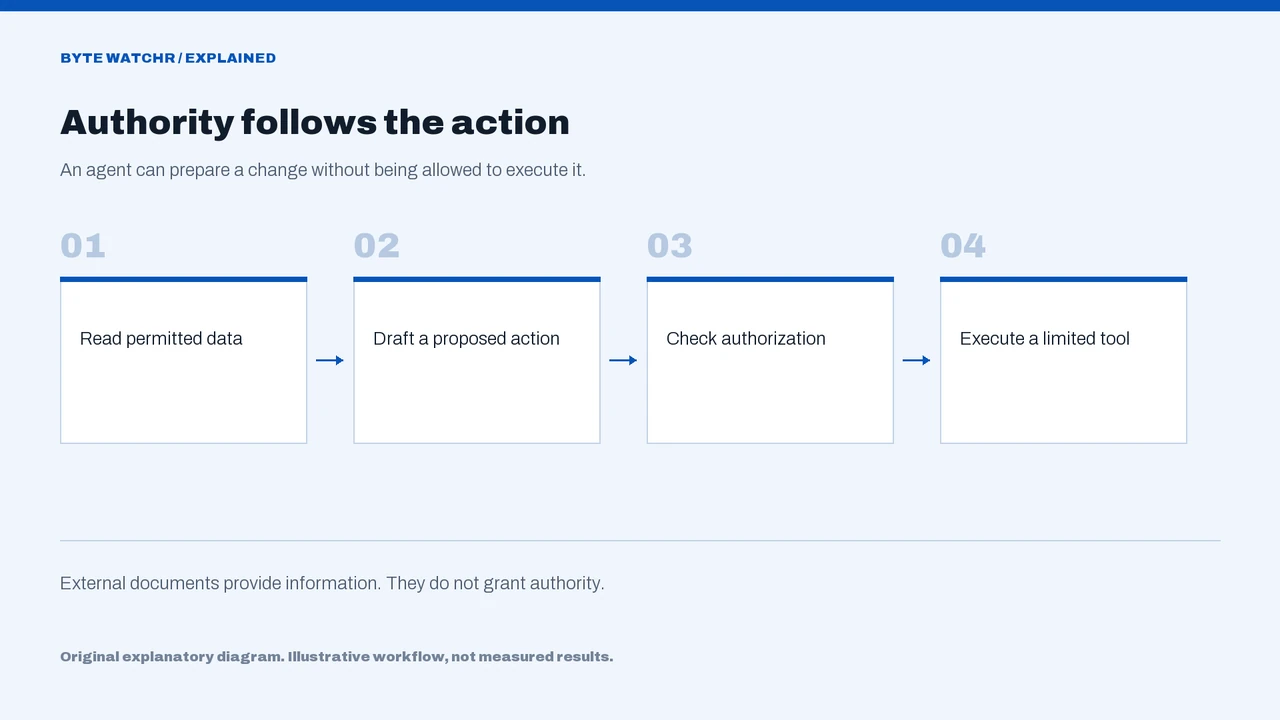
- Approval should happen at the action boundary, with a clear description of the change.
- A useful audit trail records what happened, not just the conversation.
From an answer to an action
A chatbot can suggest that a customer deserves a refund. An agent connected to a payment system can issue it. The difference is a change to the outside world, and that change requires a different kind of oversight. Calling both systems assistants hides the shift in responsibility.
Anthropic’s engineering guidance distinguishes predefined workflows from agents that choose their own paths and tool use. That distinction is useful because autonomy is a design decision. A team can automate a sequence without giving a model discretion over every step.
Give the system a narrower job
Consider an agent that reconciles invoices. It may need to read a vendor record, match a purchase order and prepare a payment. It does not automatically need to change the bank account on that vendor record. Combining these permissions gives one compromised workflow a much larger reach.
Separate reading, drafting and execution into distinct capabilities. Use short-lived credentials where the integration supports them. Set transaction limits outside the model, and treat an unfamiliar beneficiary as an exception requiring review. A natural-language instruction to be careful does not replace an enforced limit.
Make approval meaningful
An approval dialog that says Continue provides little information. A useful approval states which record will change, the amount involved and the account that will receive it. It should describe the current proposed action, because the model’s plan may have changed after reading additional material.
Approvals also need a practical stopping point. If an agent makes twenty low-risk requests before an important transfer, a user may develop a habit of accepting everything. Design routine access narrowly enough that human attention can be reserved for consequential actions.
Plan for partial completion
A workflow can fail after it has changed two systems but before it updates a third. Retrying the whole job may duplicate a payment or send a second message. The application needs operation identifiers, checks for prior execution and a record of unfinished work.
Logs should connect a tool call to its authenticated identity, inputs, outcome and approval. Preserve enough information to investigate while avoiding unnecessary copies of private data. A transcript is useful context, but it is not a reliable ledger of side effects.
The decision that matters
Before expanding autonomy, ask whether a narrower workflow would deliver the same benefit. Measure successful completed tasks, intervention rates and recoverable errors on representative work. More tools can increase capability, but they also increase the number of ways a mistake becomes consequential.
The strongest agent design makes its authority understandable. A person should be able to explain what the system can do, which changes require review and how access can be revoked. That explanation is a better indicator of readiness than a polished demonstration.
Sources & further reading
- Anthropic: Building effective agents
- OWASP: Excessive agency
- Ceron: The AI Arms Race, by Mario Luckeneder (perspective; further reading added October 4, 2026)
Factual statements are grounded in the linked material. Interpretation and illustrative examples are Byte Watchr analysis. Vendor claims are identified as claims, rather than independent testing.
This article belongs to Byte Watchr’s launch collection. The edition date organizes evergreen coverage and does not imply historical publication. Actual publication is recorded above.
Corrections policy · About this byline