What to know
- ReviewBench contains 219 pull requests across 19 languages.
- The reference findings combine human, model and static-analysis input.
- Grounded and augmented metrics answer different evaluation questions.
A benchmark built around review findings
GitHub released ReviewBench on October 5 as a research preview for evaluating AI code reviewers. Its corpus contains 219 public pull requests across 19 languages. GitHub says the selection follows language and repository-size distributions modeled from 103.9 million pull requests, while giving more weight to substantive changes than tiny edits.
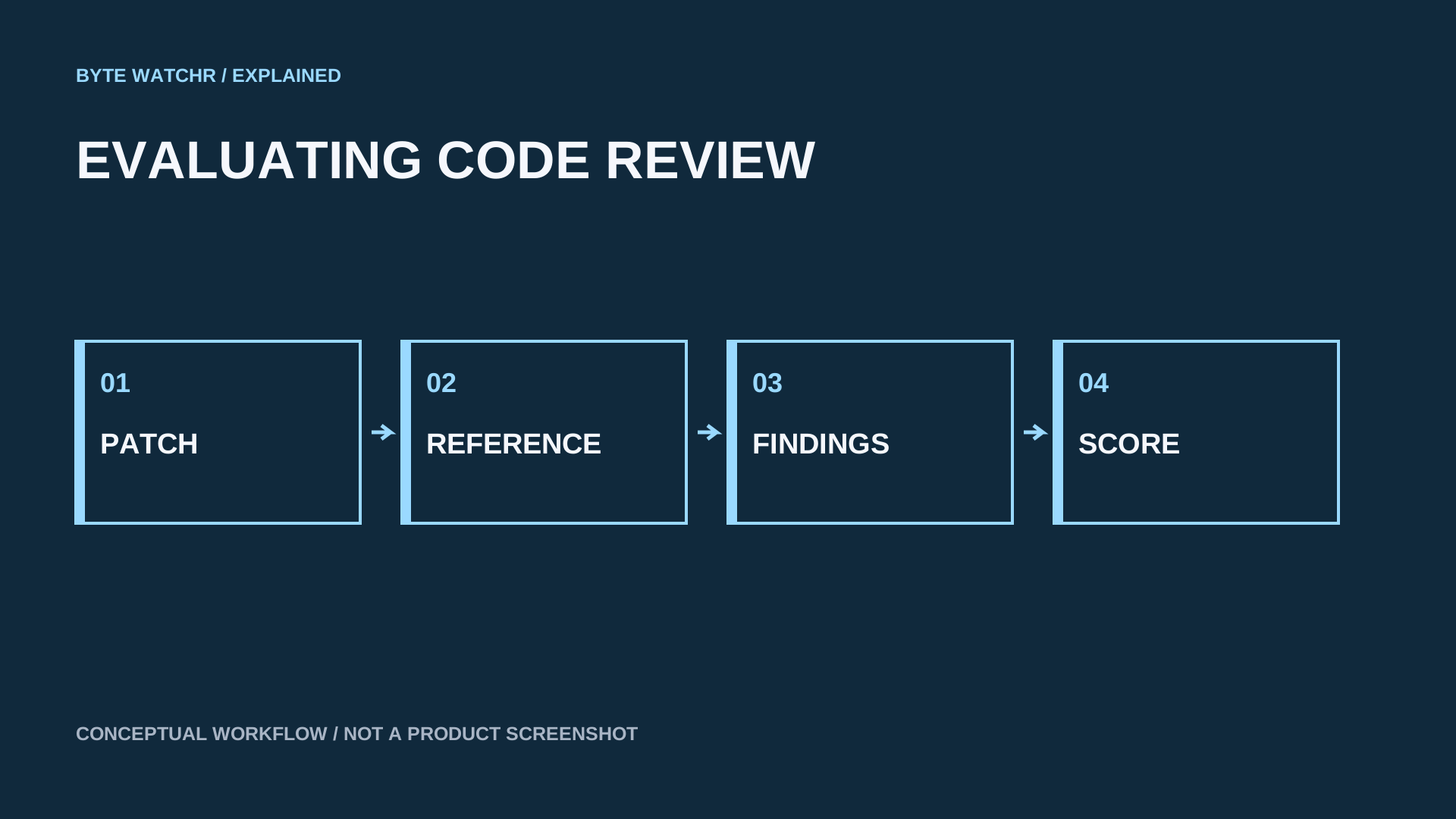
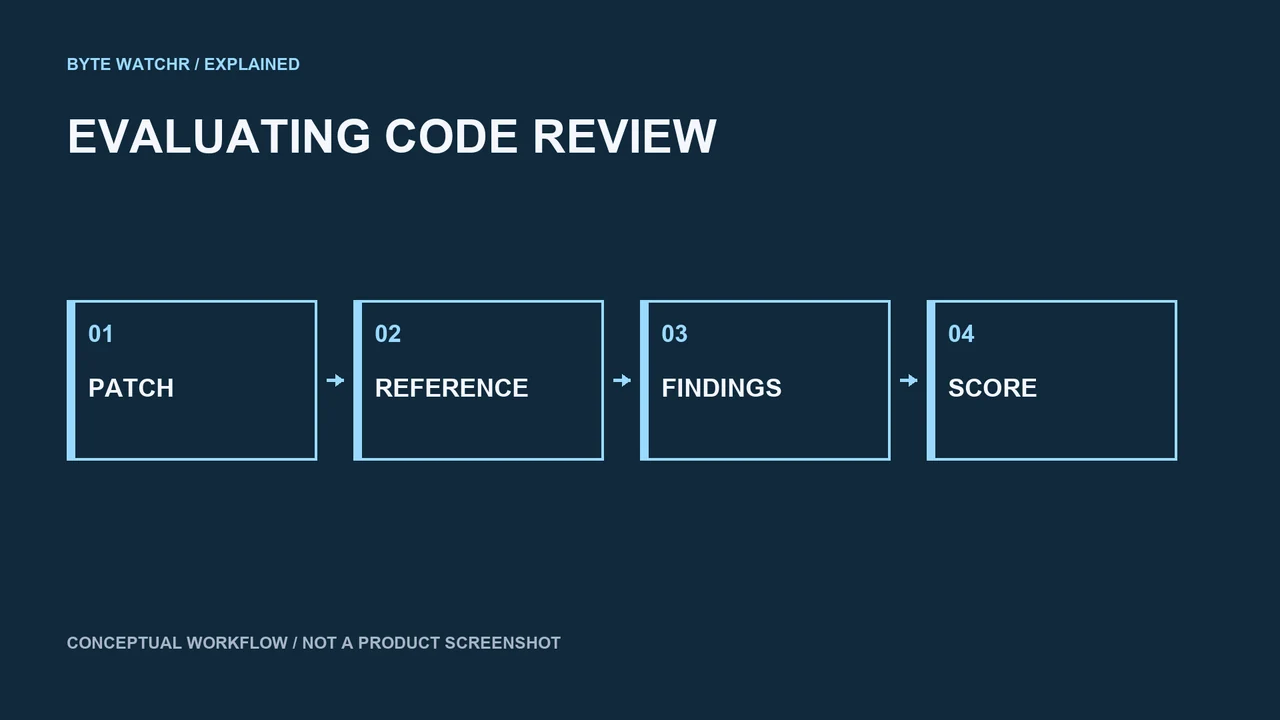
Reference findings are gathered from human reviews, models and static analysis, then assessed against a common rubric. Grounded metrics compare a reviewer with that reference set. Augmented metrics also assess new findings outside it. GitHub publishes the evaluation configuration and methodology, including its use of a model-based grader. The benchmark is a shared test environment, rather than proof that one reviewer is best for every repository.
Analysis: Precision and recall have different costs
A review tool can be useful while producing fewer comments than another system. Precision asks how much of its output identifies valid issues; recall asks how much of the known problem set it finds. The balance matters because engineers spend time investigating each comment. A high-volume reviewer can slow a team if most findings are unrelated to the proposed change.
The converse is also important. A reviewer that produces almost no false alarms may miss defects that another system detects. For a security-sensitive service, that tradeoff may differ from the one used for a small internal tool. Teams should compare the categories and severity levels relevant to their own software rather than ranking systems solely by a combined score.
Newly discovered findings create a separate evaluation problem. A fixed reference set is necessarily incomplete, so a valid issue outside it should not automatically count as a mistake. Yet allowing new findings also requires a consistent adjudication process. Readers need to know whether a score reflects agreement with established labels or a grader’s assessment of additional claims.
Local evaluation remains necessary
A public corpus makes comparisons reproducible, but an organization’s code may use a different language mix, framework or review convention. Its acceptance tests should include changes that have previously caused incidents and ordinary patches that should pass without distracting comments. Holding the input and configuration constant helps determine whether a model change improves the workflow.
The people reviewing those trials should record both detected defects and investigation effort. A comment that eventually proves correct can still be expensive if it lacks enough detail to reproduce the problem. Measuring the time required to reach a decision helps connect benchmark performance to the work engineers actually perform.
ReviewBench provides a more inspectable basis for comparing review agents. Its published rubric and split metrics let readers ask how a result was produced. That evidence is a starting point for procurement and engineering evaluation, followed by tests on representative private work and a review of the failures that remain.
Sources & further reading
Factual statements are grounded in the linked material. Interpretation and illustrative examples are Byte Watchr analysis. Vendor claims are identified as claims, rather than independent testing.
The event date records the source announcement or documented operation. The coverage edition groups recent developments and is separate from the publication date. Actual publication is recorded above.
Corrections policy · About this byline