What to know
- The $775 million figure is total funding since launch.
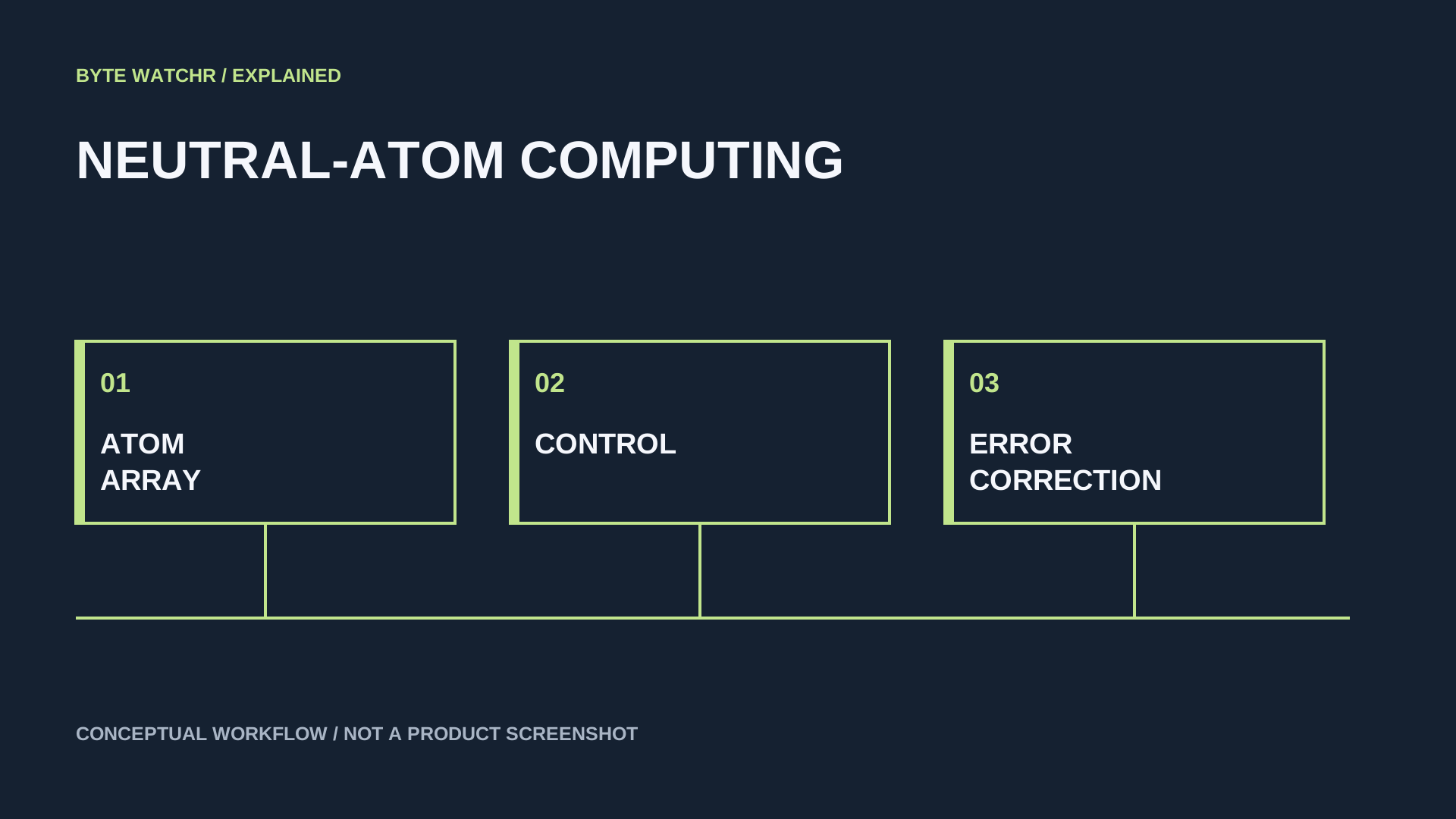
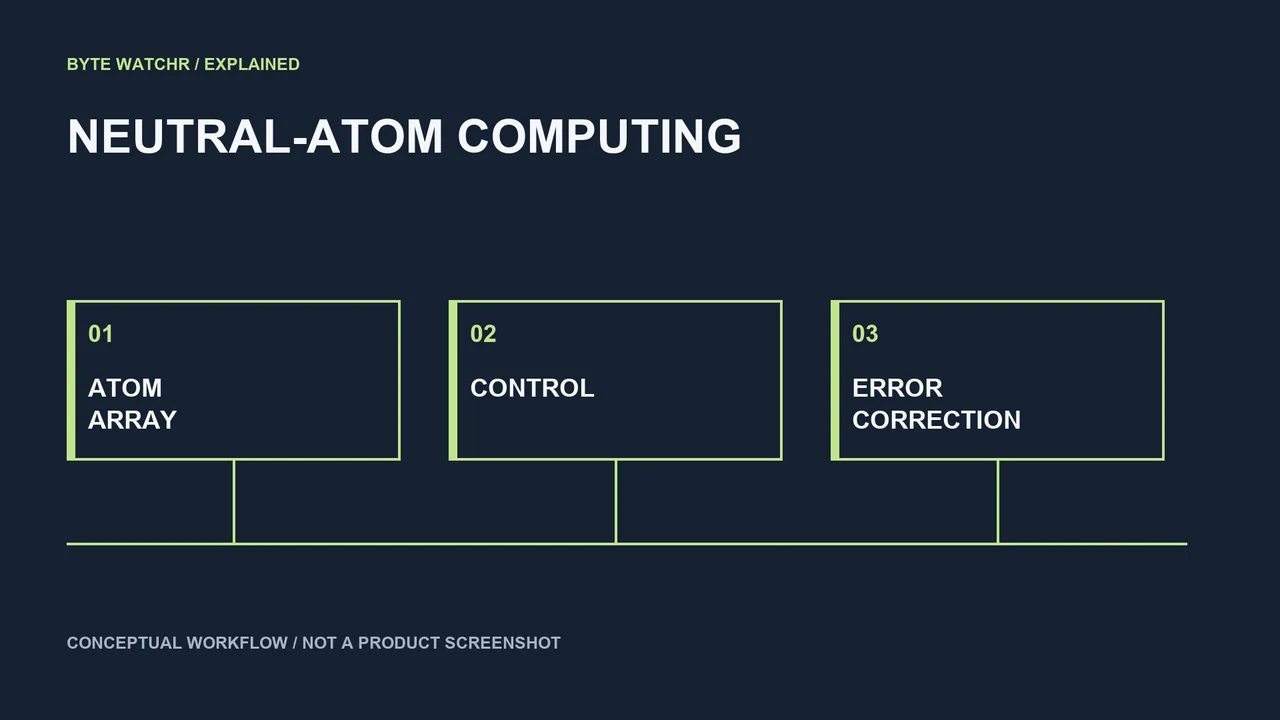
- Oratomic uses reconfigurable neutral-atom arrays.
- The announcement does not demonstrate a completed fault-tolerant computer.
A large cumulative funding milestone
Oratomic announced on October 8 that it has raised $775 million in total since its March 2026 launch. The Pasadena company is developing computers based on reconfigurable neutral-atom arrays and advanced quantum error correction. It says financing will expand scientific and engineering teams, laboratory infrastructure and systems development.
The named financing leaders include ARCH Venture Partners, Spark Capital, Khosla Ventures, Index Ventures, General Catalyst and Bezos Expeditions. The total should not be described as necessarily one new $775 million round. The announcement supplies no commercial availability date, completed fault-tolerant benchmark or demonstration that the planned system has reached useful operational scale.
Capital and capability are separate milestones
Quantum hardware development requires coordinated progress in physical control, error correction and system integration. A financing announcement can provide the resources to pursue those steps, but it does not establish that they have been achieved. Readers should distinguish an architectural approach from a measured result and a measured result from a reliable system that users can operate.
Error correction is particularly important to that distinction. Increasing the number of physical components does not automatically increase the amount of dependable computation. The relevant evidence concerns how errors are detected and suppressed, how operations behave over time and what resource overhead is required. A useful benchmark should explain those conditions rather than present one large component count.
Neutral-atom systems are one approach in a field with several competing architectures. The funding news does not by itself establish which will deliver practical advantages first. Comparisons should use a defined task and performance standard. Different demonstrations can be impressive while answering different engineering questions, making an unqualified ranking misleading.
Watch for reproducible system evidence
The next informative disclosures would include architecture details, error-correction results and an operational roadmap tied to measurable milestones. Independent review or reproducible methods can help separate a robust advance from a narrow demonstration. The company’s age and financing scale make such evidence especially useful for understanding how quickly its organization is translating resources into hardware.
Commercial readiness also requires tooling, maintenance and a usable programming path. A machine can achieve an important scientific result before becoming a dependable service. Customers considering future access should track availability and support requirements alongside the underlying physics. Announced ambitions should remain clearly labeled while those properties are developed.
Byte Watchr’s assessment is that Oratomic’s cumulative financing is a significant resource commitment to neutral-atom quantum engineering. It creates room for a substantial development program without proving the final outcome. The story to follow is the progression from funded laboratory work to documented error-corrected performance and eventually a system that supports useful, repeatable workloads.
Sources & further reading
Factual statements are grounded in the linked material. Interpretation and illustrative examples are Byte Watchr analysis. Vendor claims are identified as claims, rather than independent testing.
The event date records the source announcement or documented operation. The coverage edition groups recent developments and is separate from the publication date. Actual publication is recorded above.
Corrections policy · About this byline