What to know
- The Series A exceeds $100 million.
- DCVC and Firgun Ventures co-led the financing.
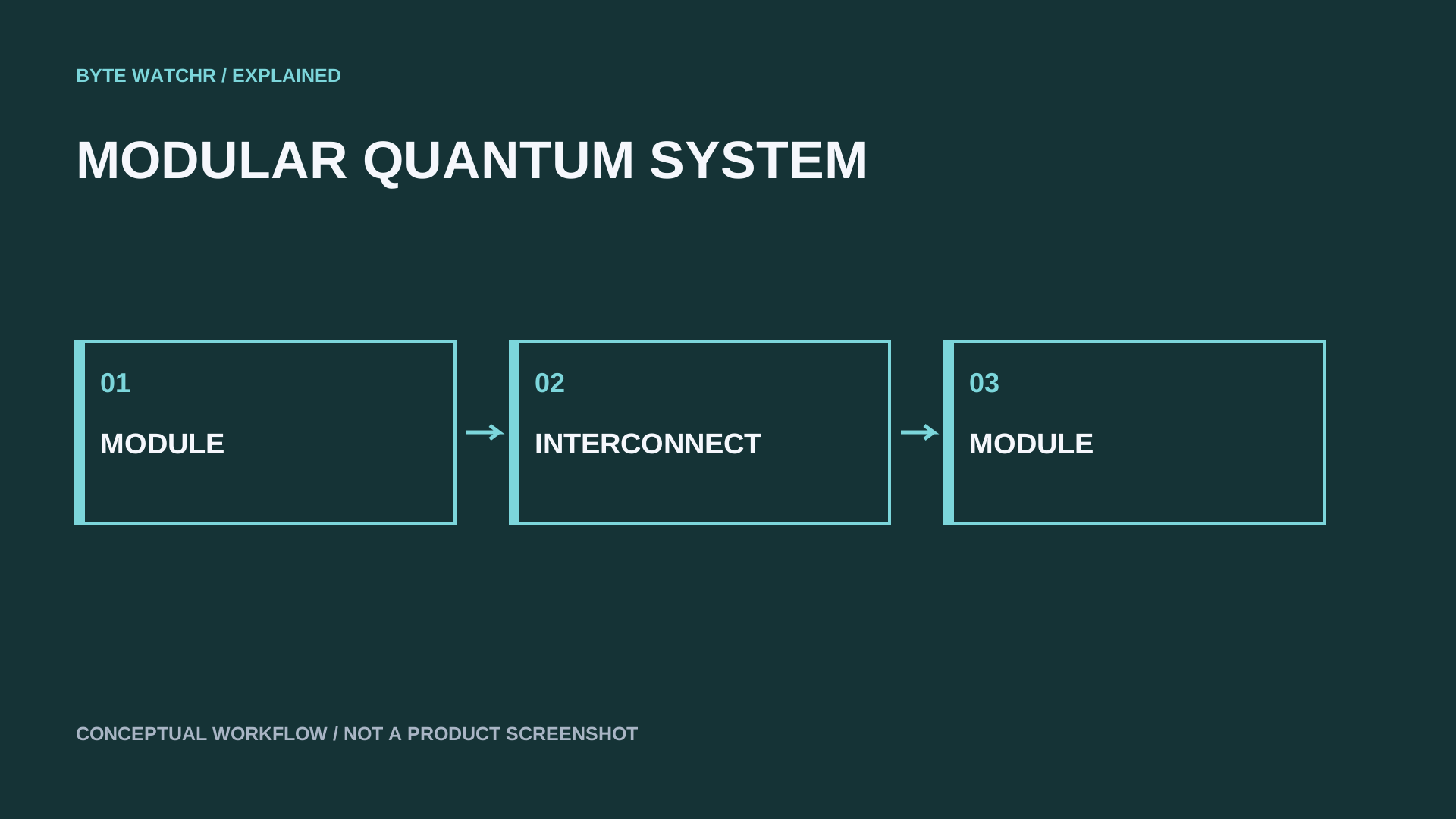
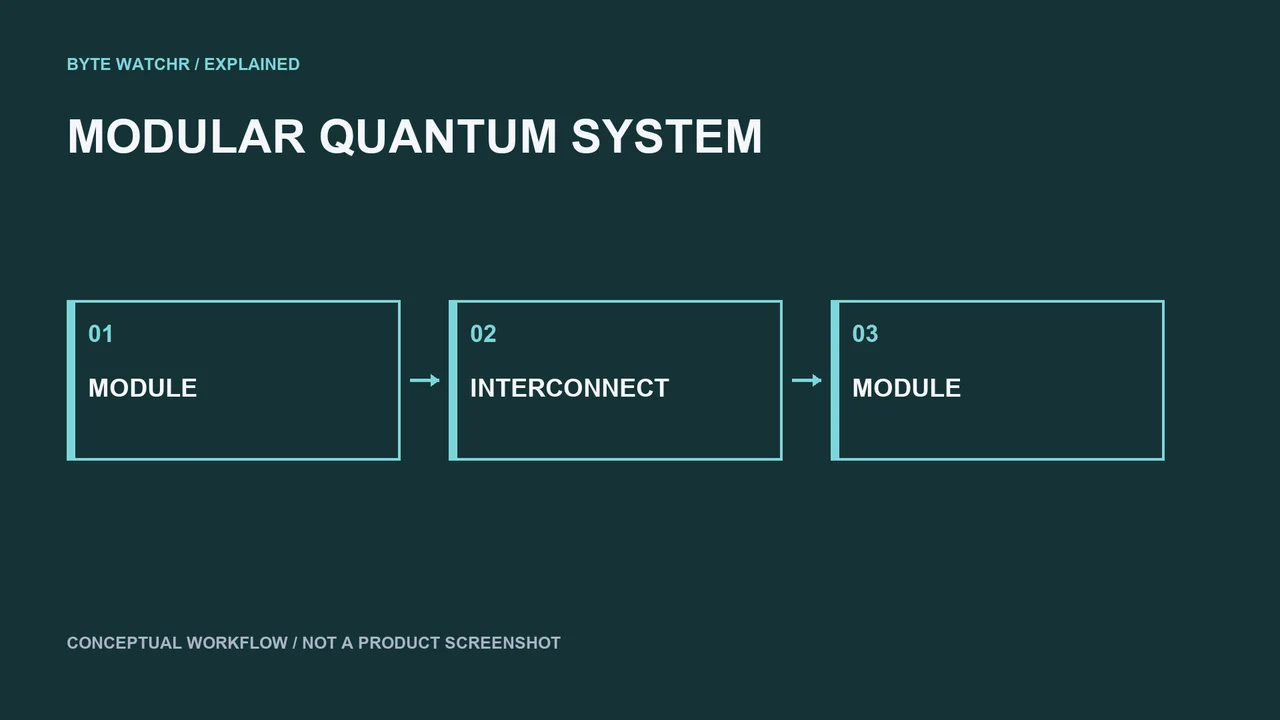
- The company connects smaller trapped-ion chips into modular systems.
Funding for a connected-chip architecture
Nauta Capital announced on October 8 that Universal Quantum secured more than $100 million in Series A financing, co-led by DCVC and Firgun Ventures. The British company develops modular systems that connect smaller trapped-ion chips instead of relying on one enormous processor. Funding will support chiplet arrays, control systems, development, commercialization and international expansion.
The investor says the company has more than 100 technical staff and is delivering against a $77 million German Aerospace Center contract. This is primary reporting from a participating investor, whose market and engineering characterizations are promotional assessments. The financing does not demonstrate completed fault tolerance or independently prove that every scaling challenge has been solved.
Modularity moves the engineering problem
Connecting smaller modules can offer a route to expansion, but it introduces demands at the connections between them. The full system must preserve the properties needed for computation while coordinating control, communication and error handling. A modular design should therefore be evaluated as an integrated machine rather than as a collection of individually promising chips.
Useful evidence would explain the performance of operations within a module and across modules under comparable conditions. A system can scale in physical size while becoming harder to control. Error rates, timing and resource overhead determine whether that expansion produces more dependable computation. Those measures are more informative than a broad statement that the architecture is scalable.
Commercialization adds further requirements. Customers need software interfaces, maintenance procedures and predictable service behavior. A contract can support development and establish demand, but its existence does not reveal the delivery state of every technical milestone. Progress should be described using the terms and evidence actually available.
Follow the transition from research to operation
The new capital can support parallel work on hardware, controls and an organization capable of delivering systems. That breadth matters because a scientific advance can remain difficult to reproduce outside its original laboratory. Engineering documentation and repeatable manufacturing processes help turn a successful experiment into equipment that other teams can operate.
Future disclosures should separate component demonstrations, integrated performance and customer delivery. Independent evaluation can help clarify where the company’s approach has established an advantage and where further work remains. Comparisons with other quantum architectures should use consistent tasks and success criteria rather than promotional claims about category leadership.
Byte Watchr’s assessment is that the Series A strengthens the resources behind a modular trapped-ion strategy. The central question remains technical: whether connecting modules yields reliable, useful scale under realistic operating conditions. Financing and international expansion create capacity to pursue that goal, while measured system results will determine how much of the proposed architecture has become an operational capability.
Sources & further reading
Factual statements are grounded in the linked material. Interpretation and illustrative examples are Byte Watchr analysis. Vendor claims are identified as claims, rather than independent testing.
The event date records the source announcement or documented operation. The coverage edition groups recent developments and is separate from the publication date. Actual publication is recorded above.
Corrections policy · About this byline