Cybersecurity / News analysis
npm lets trusted publishers manage release tags without long-lived tokens
The new opt-in permission closes a gap in token-free release workflows, but the authority to move a release tag still needs deliberate limits.
AUTHOR INDEX
Julien Mercier contributes software, AI and technology industry analysis to Byte Watchr. His coverage examines how new tools reach working systems and how product decisions affect accountability, control and everyday use.
Cybersecurity / News analysis
The new opt-in permission closes a gap in token-free release workflows, but the authority to move a release tag still needs deliberate limits.
AI Security / News analysis
Repository-specific memories can inform later fixes, creating a need to check whether stored patterns remain correct as code and security requirements change.
Artificial Intelligence / Analysis
As assistants become agents, permissions, accountability and recovery become the real architecture of trust.
Technology / Explainer
Memory capacity, bandwidth, and compute throughput answer different questions. A useful performance comparison starts with the workload.
Cybersecurity / Explainer
The useful design question is who may perform which action on which resource, under what conditions. Network location supplies context, not automatic permission.
Data Breaches / Analysis
Cloud services can faithfully enforce the wrong permissions. The critical question is which identities can reach data, delegate access, and change the rules.
AI Security / Analysis
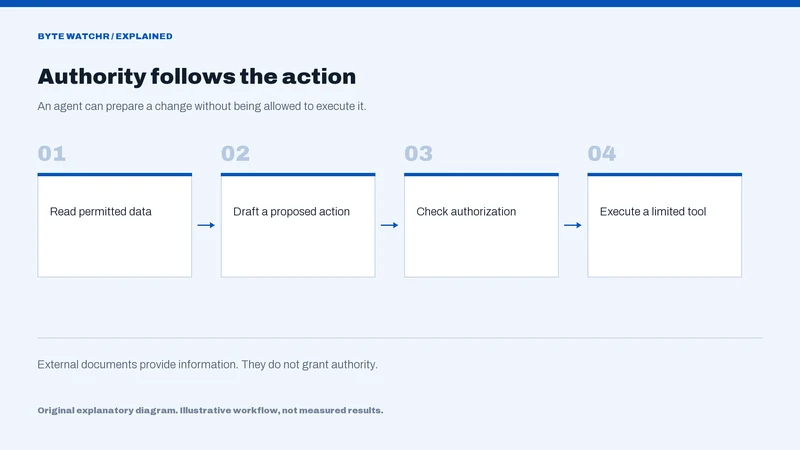
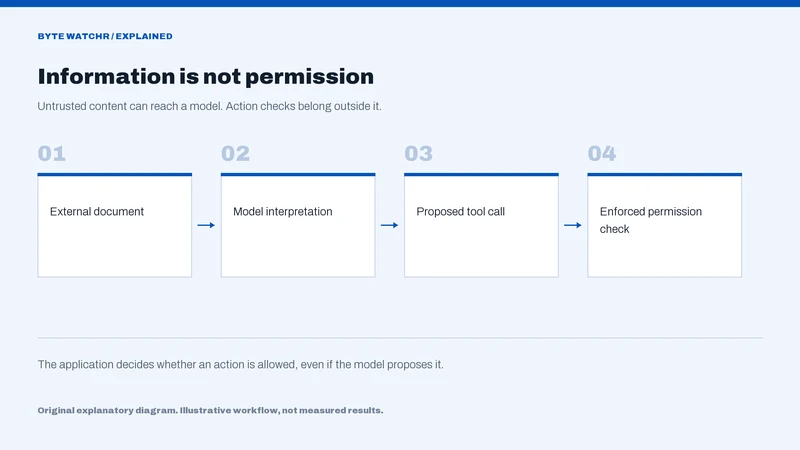
When an AI assistant reads the outside world, it must decide what is evidence and what has authority. That boundary is the security problem.
Companies / News analysis
The April amendment is a useful case study in why cloud access, intellectual-property rights, revenue sharing, and ownership should be read separately.
Artificial Intelligence / News analysis
A retrospective on the April announcement and the questions it raised about distribution, access, and the meaning of a useful assistant.