What to know
- Security overview reports enabled and not-enabled repository counts.
- Repository rows show effective AI Scan enablement.
- CSV exports include the pull-request AI Scan status.
Coverage becomes visible at organization scale
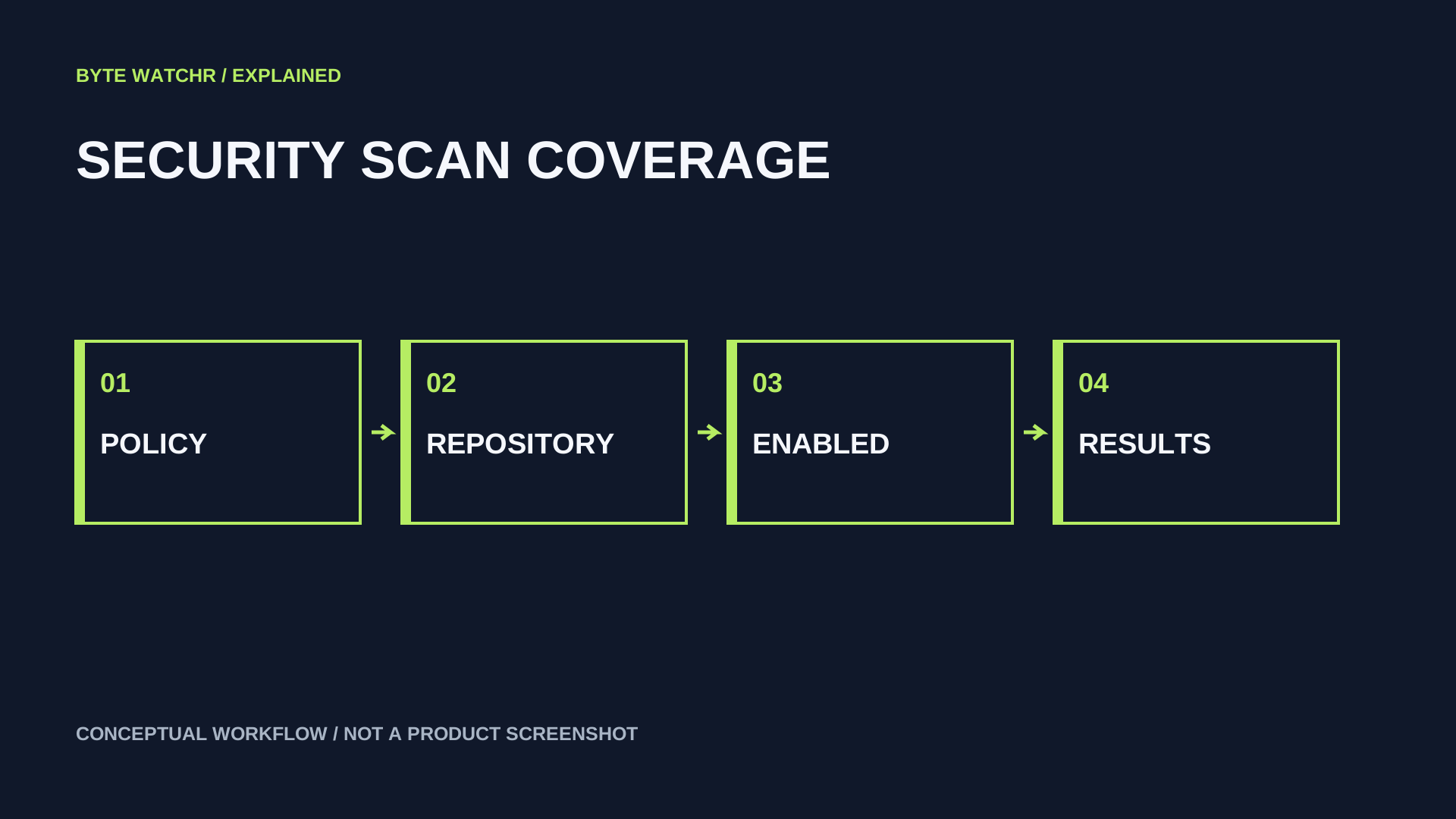
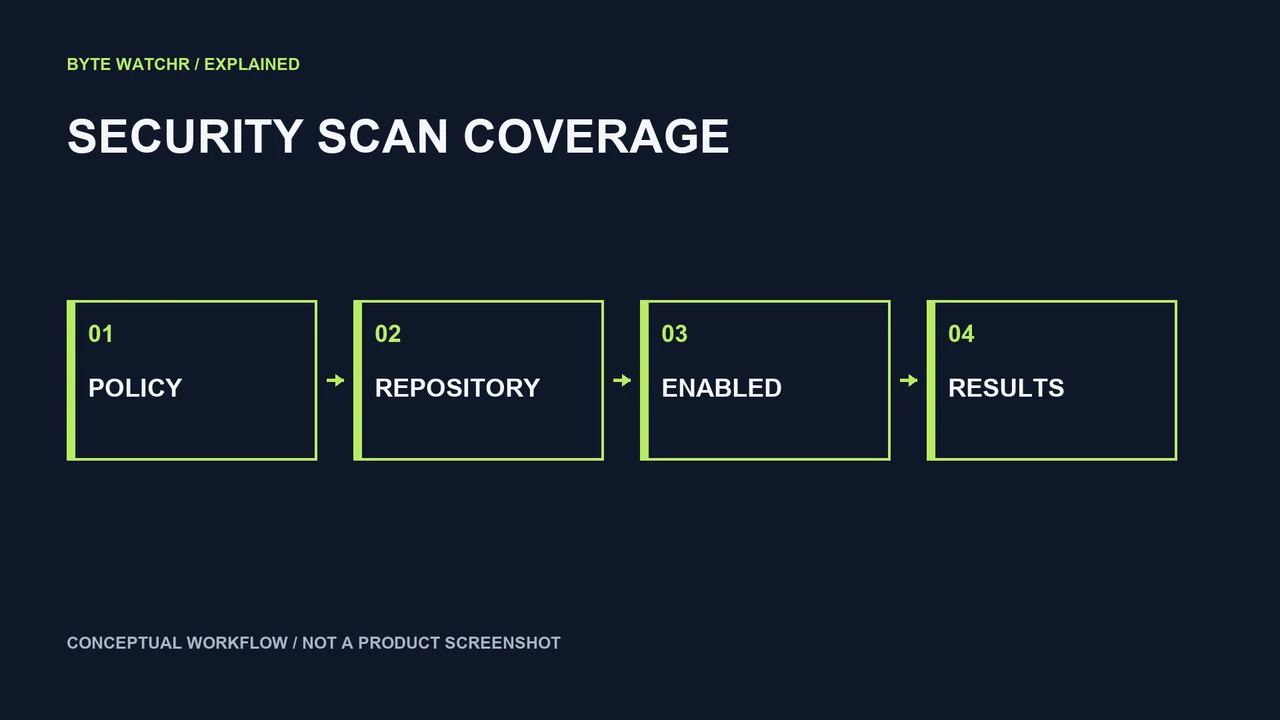
GitHub added pull-request AI Scan enablement status to security overview on October 6. Organization and enterprise administrators can see enabled and not-enabled repository totals, while individual rows display each repository’s effective setting. The coverage view supports filters for both states.
Coverage CSV exports also include a dedicated AI Scan column. The change gives administrators a way to inspect adoption across a repository fleet and compare the results with their own inventory. It reports whether the feature is enabled. It does not report how many defects the scanner finds, whether each scan completes successfully or whether the repository’s review process resolves its findings.
Analysis: Adoption is one part of a coverage assessment
A useful security inventory needs a defined denominator. Repositories can be active products, archived references, experiments or mirrors, and their expected controls may differ. An enabled percentage without that context can obscure the systems that matter most. Administrators should connect the export to repository ownership and the policies that apply to each project.
Effective configuration is helpful because settings can be inherited or overridden. When the displayed state differs from a team’s expectation, the investigation should identify the controlling policy rather than toggling an individual repository without understanding the hierarchy. A centrally managed exception can otherwise be recreated accidentally during the next policy update.
Coverage reviews also need to account for new repositories and ownership changes. A one-time export cannot guarantee that a service created next week receives the intended checks. Teams can compare successive inventories and assign a person to investigate changes. The goal is a known, explainable state for each relevant repository, with exceptions recorded rather than hidden in an aggregate number.
A configured scanner needs an operating workflow
Once a feature is enabled, its execution and results deserve separate attention. A scanner that repeatedly fails or produces findings nobody reviews may contribute little to the release process. Administrators can pair configuration data with evidence that scans run on the expected changes and that developers have a workable path for addressing or disputing a result.
AI-generated findings also need the same discipline as other automated alerts. A report should identify the relevant code path and support reproduction where possible. Reviewers need to distinguish a credible defect from a speculative concern before deciding whether it blocks a merge. The enablement field cannot substitute for that judgment.
The new view closes a visibility gap for administrators overseeing many projects. Its main use is to make adoption and exceptions easier to inspect. Treating configuration, execution and remediation as separate records allows an organization to understand where a control is present and where it is producing a verified security outcome.
Sources & further reading
Factual statements are grounded in the linked material. Interpretation and illustrative examples are Byte Watchr analysis. Vendor claims are identified as claims, rather than independent testing.
The event date records the source announcement or documented operation. The coverage edition groups recent developments and is separate from the publication date. Actual publication is recorded above.
Corrections policy · About this byline