What to know
- The update adds Lovable, Logfire, Pydantic AI Gateway and Supabase detectors.
- Lovable joins GitHub’s secret scanning partnership program.
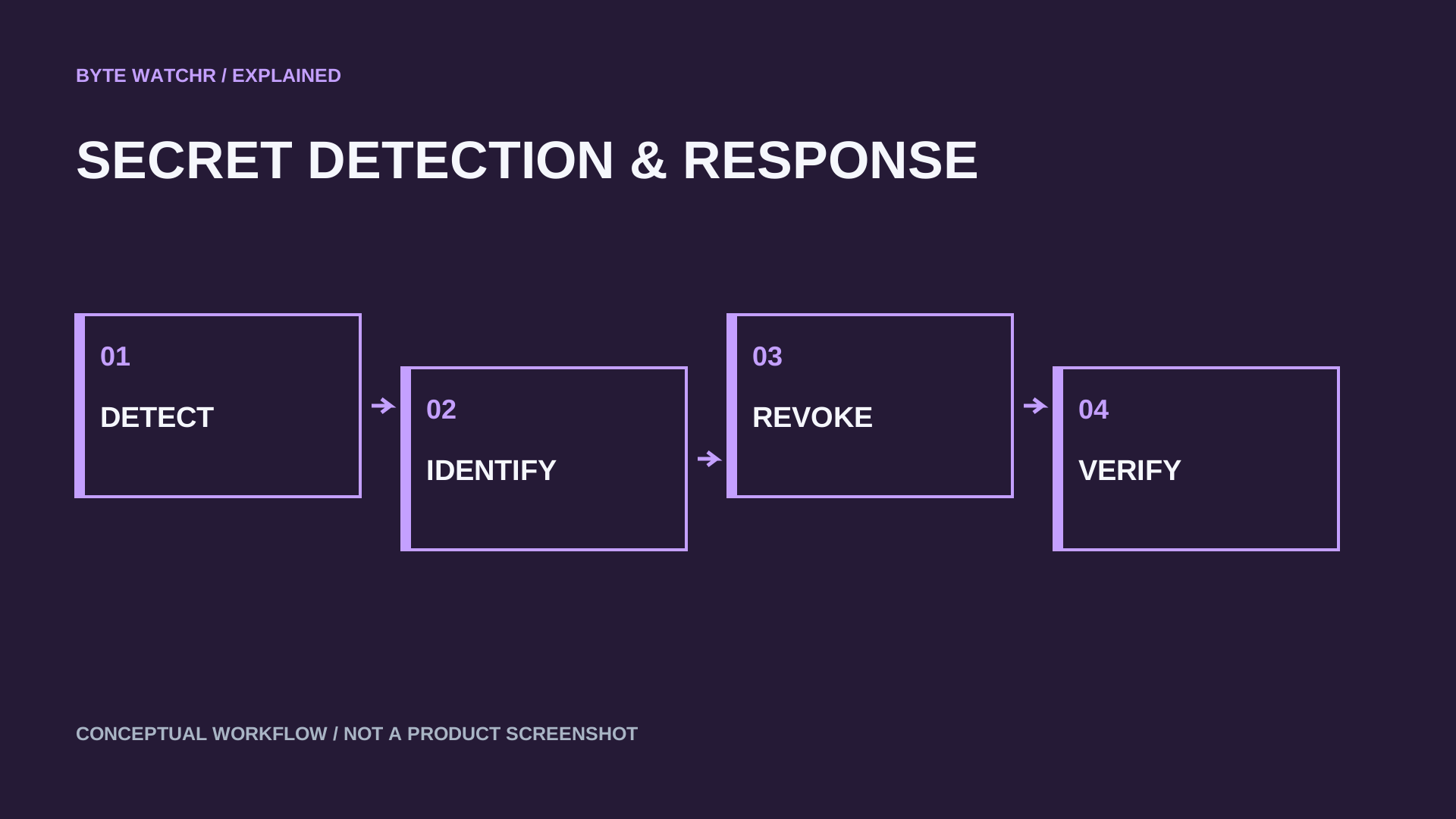
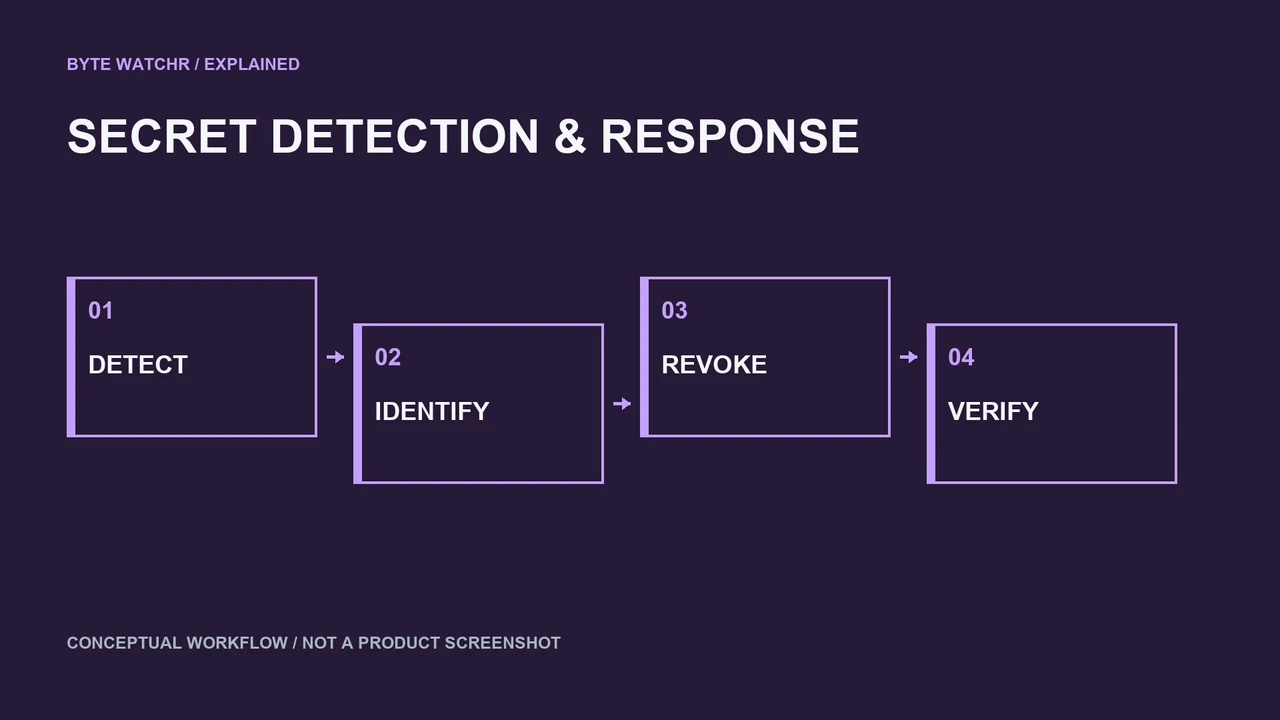
- Detection, provider notification and credential revocation are separate steps.
Five credential types enter the detector set
GitHub expanded secret scanning on October 5 to detect Lovable API keys, Pydantic Logfire tokens, Pydantic AI Gateway keys, Supabase OAuth access tokens and Supabase scoped personal access tokens. The update extends coverage to credentials used across application building, observability and database services.
Lovable also joined the secret scanning partnership program. GitHub says secrets found in public repositories are forwarded to participating providers so they can revoke or rotate them. User alerts and partner notifications have different delivery paths. The announcement describes additional detection and reporting support; it should not be read as evidence that every exposed credential has already been invalidated.
Analysis: A finding needs an accountable response
A secret-scanning alert is useful when it reaches someone who can act on the credential. Repository ownership and service-account ownership may belong to different teams. The response process needs a route from the code finding to the system where the key is managed, including a contact who can approve replacement and investigate its use.
Removing the text from the latest commit is only one part of that response. A credential may remain in repository history, a copied artifact or a local checkout. The central question is whether the old value can still authorize requests. Revocation and replacement should be confirmed in the issuing service, while the application is checked for continued operation with its new credential.
An organization should also understand what the key could access. A narrowly scoped token and a broad administrative key require different investigation priorities. The record should include its permissions, the systems that used it and any evidence of unexpected activity. The detector’s ability to recognize a format does not establish those details automatically.
Coverage needs to follow the tools people adopt
New developer services create new places for credentials to appear. Teams can inventory the platforms used in prototypes as well as production, because a small experiment may connect to real data or shared infrastructure. Scanning policies should be reviewed when a new service is introduced, rather than waiting until an exposure is discovered.
The supported detector list is also useful during a control review. A company can compare its actual credential formats with the scanner’s coverage and decide how to handle gaps. Where a format is not recognized, the response may involve a custom pattern, a different storage practice or a change to the application’s authentication design. Each option needs to be tested against real usage.
The expanded detector set improves the chance that certain credentials are identified before or after they enter a repository. The verified outcome is a credential that no longer grants unintended access and a corrected workflow that avoids repeating the exposure. Alert counts alone cannot establish either result.
Sources & further reading
Factual statements are grounded in the linked material. Interpretation and illustrative examples are Byte Watchr analysis. Vendor claims are identified as claims, rather than independent testing.
The event date records the source announcement or documented operation. The coverage edition groups recent developments and is separate from the publication date. Actual publication is recorded above.
Corrections policy · About this byline